Generated with AI3 min read
Desalination
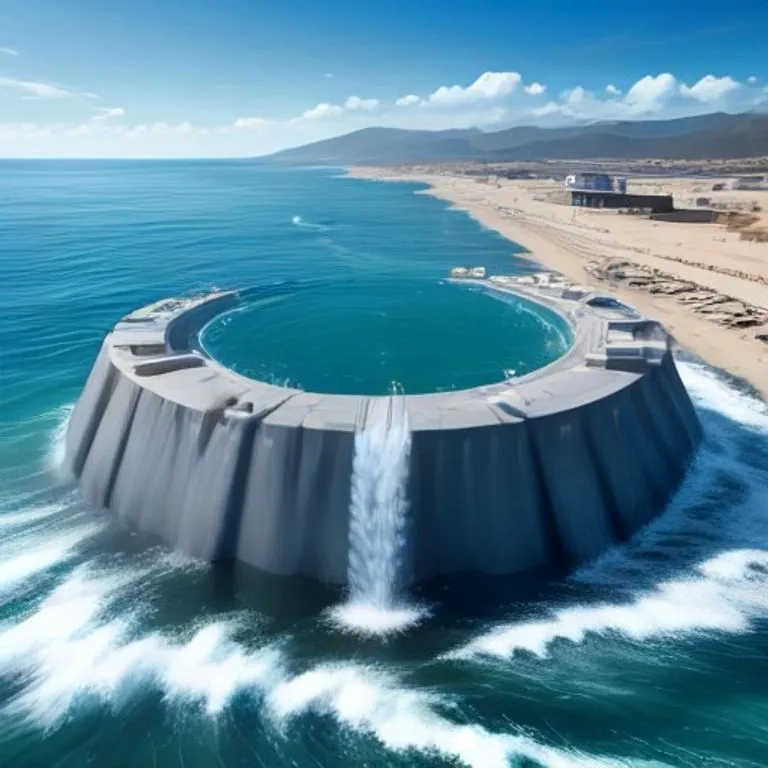
Brief description
Desalination is the technological process of separating dissolved mineral salts and impurities from saline water (seawater or brackish groundwater) to produce potable fresh water. Highlighted in survival codices and “The Book” as a vital survival technology, desalination enables human settlement and agriculture in arid coastal regions or post-collapse environments devoid of fresh surface water.
Use / Function
- Potable Water Production: Converting undrinkable seawater (~35,000 ppm dissolved solids) into safe drinking water (<500 ppm).
- Agricultural Irrigation: Producing irrigation water for crops vulnerable to soil salinity.
- Industrial Processing: Providing ultra-pure water for boilers, chemical processes, and pharmaceutical manufacturing.
- Scale: Survival stills, community thermal plants, and large-scale industrial municipal facilities.
Operating principle
Saline water separation relies primarily on phase change (thermal evaporation) or selective membrane filtration:
- Thermal Distillation (Phase Change):
- Saline water is heated in a closed container (Boiler or basin).
- Water molecules ($H_2O$) vaporize into steam at boiling point (or evaporate under solar radiation), while heavy dissolved salt ions ($Na^+$, $Cl^-$) remain trapped in the liquid brine concentrate.
- Pure steam rises, contacts a cooler condensing surface, and condenses into salt-free fresh water droplets that drain into a clean reservoir.
- Reverse Osmosis (Membrane Separation):
- High-pressure pumps force saline water against a semi-permeable polymer membrane.
- The microscopic membrane pores allow water molecules to pass while rejecting larger hydrated salt ions.
How to implement
-
Simple Thermal / Solar Distillation:
- Construct a shallow black basin lined with non-reactive material (darkened ceramic or butyl liner).
- Fill the basin with seawater.
- Cover with an angled clear pane of Glass or plastic sheeting, sealed tightly at the edges.
- Angle the glass toward sunlight. As water evaporates and condenses on the underside of the cool glass, gravity slides fresh water droplets into a collection trough at the lower rim.
-
Fuel-Fired Boiler & Condenser System:
- Boil seawater inside a sealed metal boiler (Boiler) using wood, coal, or concentrated solar heat.
- Route generated steam through a spiraled Copper cooling coil immersed in cold sea water (counter-current heat exchanger).
- Collect condensed fresh water from the coil outlet while periodically draining accumulated heavy brine from the boiler bottom to prevent mineral scaling.
Materials needed
- Thermal Collectors & Vessels: Glass sheet, black heat-absorbing containers, or Copper / iron boilers.
- Condenser Tubing: Copper or stainless steel pipes.
- Insulation & Frames: Hardwood boards (Wood), masonry, or insulating clay.
- Feedstock: Raw saline Water.
Variants and improvements
- Solar Still: Low-tech, zero-fuel method driven entirely by direct solar radiation; produces 2 to 5 liters per square meter daily.
- Multi-Stage Flash (MSF) Distillation: Passes hot brine through successive vacuum chambers operating at progressively lower pressures, causing instant “flashing” into steam with high energy efficiency.
- Vapor Compression Distillation: Mechanically compresses evaporated steam to increase its temperature, recycling heat back to boil incoming seawater.
Limits and risks
- High Energy Intensity: Thermal distillation requires significant thermal energy (~2.3 MJ/kg of water evaporated) unless solar power or waste heat is utilized.
- Mineral Scaling & Corrosion: Concentrated hot brine aggressively corrodes iron boilers and deposits calcium sulfate/carbonate scale on heat exchangers.
- Brine Disposal: Concentrated wastewater (brine) must be disposed of carefully to avoid killing local marine ecosystems.