Generated with AI2 min read
Basic Electronics
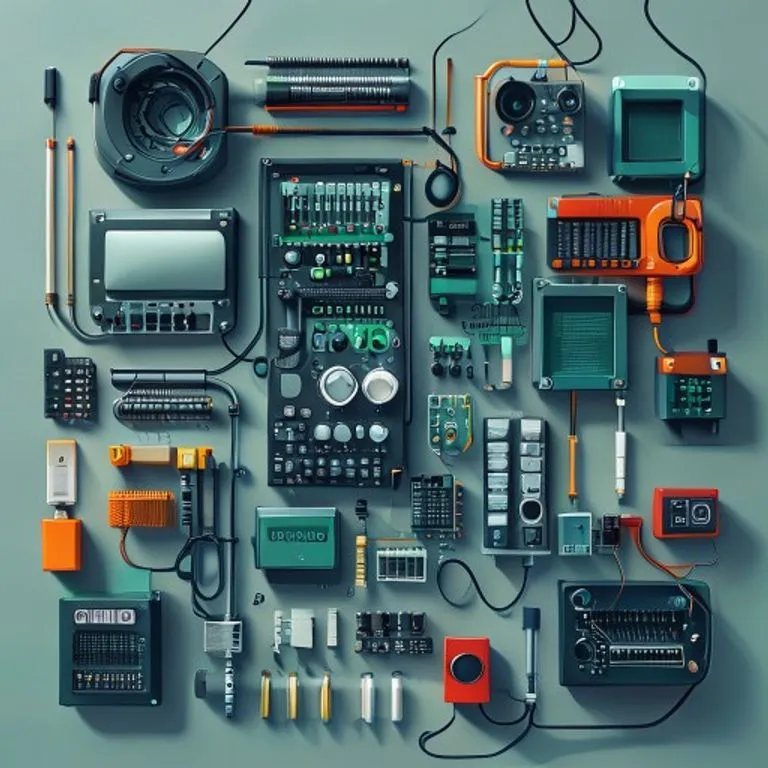
Brief description
Electronics is the branch of physics and technology concerned with the design of circuits using transistors and microchips, and with the behavior and movement of electrons in a semiconductor, conductor, vacuum, or gas.
Use / Function
- Information Processing: Computing, logic, and data storage.
- Communication: Wireless (Radio) and wired (Telegraph) transmission of data.
- Control Systems: Automating machinery and regulating power.
- Signal Amplification: Making weak signals (like from a microphone) usable.
Operating principle
Basic electronics relies on controlling the flow of electrons to perform work or process information.
- Components: Passive components (resistors, capacitors) and active components (vacuum tubes, transistors) are combined to create circuits.
- Circuit Theory: Understanding how voltage, current, and resistance interact (Ohm’s Law, Kirchhoff’s Laws).
- Signal Manipulation: Converting physical phenomena (sound, light) into electrical signals, processing them, and converting them back.
- Semiconduction: Using materials like silicon to create “valves” (diodes, transistors) that control current based on other electrical signals.
How to implement
1. Master the Components
- Understand what Resistors and Capacitors do.
- Learn about semiconductors and how Transistors or Vacuum Tubes amplify signals.
2. Prototyping
- Use breadboards or “dead-bug” style wiring to connect components without permanent soldering.
- Follow basic circuit diagrams (schematics).
3. Assembly
- Use Solder (Tin/Lead alloy) and a heated iron to permanently join components on a circuit board.
Materials needed
- Substrate: Perforated board, wood, or etched Copper clad boards.
- Joining: Solder and soldering iron.
- Conductors: Insulated Copper wire.
- Power: Batteries or generators.
Variants and improvements
- Analog Electronics: Dealing with continuous signals (older radios, audio).
- Digital Electronics: Dealing with discrete 0/1 levels (computers).
- Integrated Circuits (Microchips): Shrinking thousands or millions of components onto a tiny silicon wafer.
Limits and risks
- Complexity: Electronic systems can become incredibly complex very quickly.
- Fragility: Components are sensitive to heat, static electricity, and physical impact.
- Scavenging: In a survival situation, most advanced electronic components must be scavenged from existing devices as they are nearly impossible to manufacture from scratch.
- Electrostatic Discharge (ESD): Static electricity from your body can destroy sensitive transistors.