Generated with AI2 min read
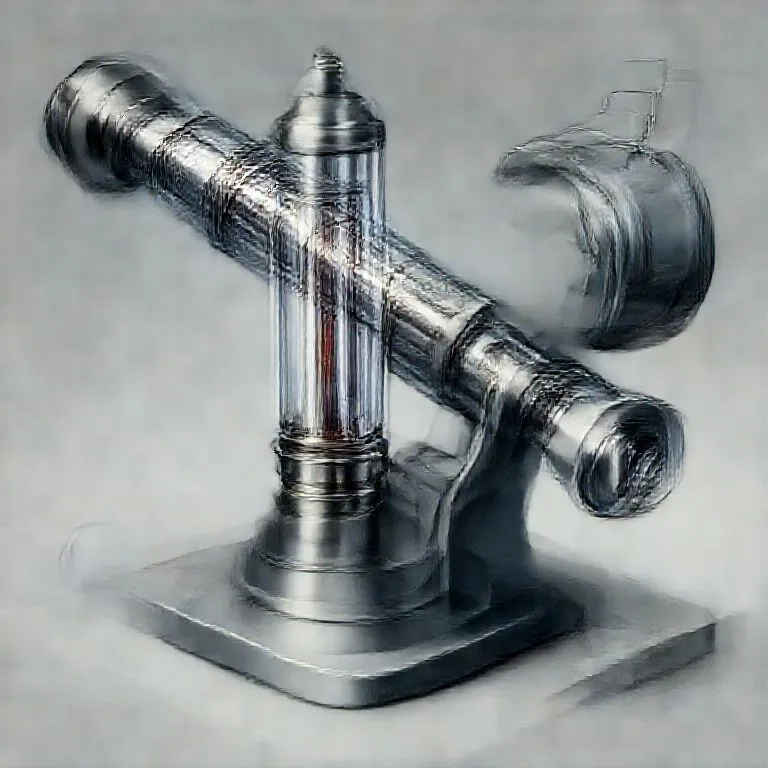
X-ray tube
Brief description
An X-ray tube is a specialized vacuum tube that generates X-rays when high-energy electrons strike a metal target. It is the core source inside any X-ray apparatus.
Use / Function
- X-ray generation: Produces the radiation used for imaging.
- Control: Allows a focused beam for medical and industrial radiography.
- Scalable output: Works from low-power dental units to high-power industrial systems.
Operating principle
- Thermionic emission: A tungsten filament heats and emits electrons.
- Acceleration: High voltage drives electrons across a vacuum.
- Target impact: Electrons hit a tungsten target and create X-rays.
- Window and filtering: A thin window releases the beam while filters reduce low-energy dose.
How to create it
- Build the envelope: Seal a glass bulb with a cathode and tungsten target.
- Set electrode spacing: Align cathode-to-anode distance for stable focus.
- Evacuate and seal: Use a vacuum pump, then seal the tube airtight.
- Add high-voltage connections: Insulate leads and use appropriate feedthroughs.
- Mount in shielding: Place the tube inside a lead-lined housing for safety.
Minimum functional version: sealed tube with tungsten cathode/target, strong vacuum, and basic high-voltage supply. Technical level is advanced due to vacuum work, high voltage, and radiation safety.
Materials needed
- Essential: Glass for the envelope, Tungsten for filament/target, Copper for conductors.
- Shielding: Lead to block stray radiation.
- Structure: Steel for the tube mount and housing.
- Tools: Vacuum pump, high-voltage insulation, alignment tools.
Variants and improvements
- Rotating anode: Higher power and better heat distribution.
- Microfocus tube: Sharper imaging for small parts.
- Metal-ceramic tube: More durable and stable in high-power systems.
- Grid-controlled tube: Faster pulsing and dose control.
- Cooling integration: Paired with an X-ray cooling system for higher duty cycles.
Limits and risks
- Radiation exposure: Requires strict shielding and controlled operation.
- High voltage: Severe electrical hazard during assembly and maintenance.
- Heat load: Target damage if cooling is inadequate.
- Vacuum integrity: Leaks reduce output and cause failure.