Generated with AI2 min read
X-ray cooling system
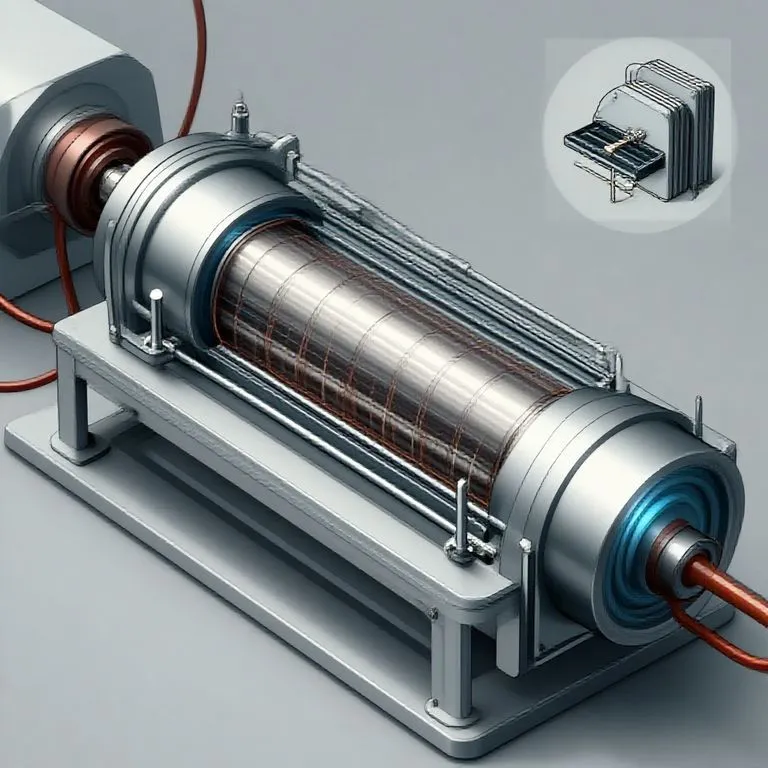
Brief description
An X-ray cooling system removes heat from the tube target and housing so the tube can run safely and repeatedly without damage or drift.
Use / Function
- Heat removal: Carries away heat from the anode and tube housing.
- Stability: Keeps focal spot and output stable during long exposures.
- Protection: Prevents damage to the target, seals, and insulation.
- Duty cycle control: Extends how often the system can be used.
Operating principle
- Heat capture: Thermal contact draws heat from the tube assembly into a coolant path.
- Transport: Circulating coolant carries heat away from the tube.
- Rejection: A radiator or heat exchanger releases heat to air or water.
- Control: Flow rate and temperature monitoring keep the system within limits.
How to create it
- Design the loop: Decide on water or sealed liquid cooling for the tube housing.
- Build heat contact: Attach a metal jacket or channel around the tube mount for heat transfer.
- Add circulation: Install a pump and plumbing for continuous flow.
- Reject heat: Use a radiator, fins, or heat exchanger sized to the tube power.
- Add safety: Include temperature limits, pressure relief, and leak checks.
Minimum functional version: a simple water jacket with gravity or pump circulation and a basic heat sink. Technical level is intermediate to advanced due to sealing, heat transfer, and safety needs.
Materials needed
- Essential: Water as coolant, Copper for heat transfer paths, Steel for structure and housing.
- Tools: Pump, tubing, seals, and temperature measurement.
Variants and improvements
- Oil cooling: Better electrical insulation for high voltage.
- Closed-loop chillers: Precise temperature control and stable output.
- Microchannel jackets: Higher heat transfer in compact space.
- Air-assisted radiators: Better heat rejection with low pump load.
Limits and risks
- Leaks: Can damage insulation or cause electrical hazards.
- Overheating: Inadequate flow or radiator size leads to tube failure.
- Contamination: Particles or algae reduce flow and heat transfer.
- Pressure spikes: Blockages can rupture hoses or seals.