Generated with AI3 min read
Windmill
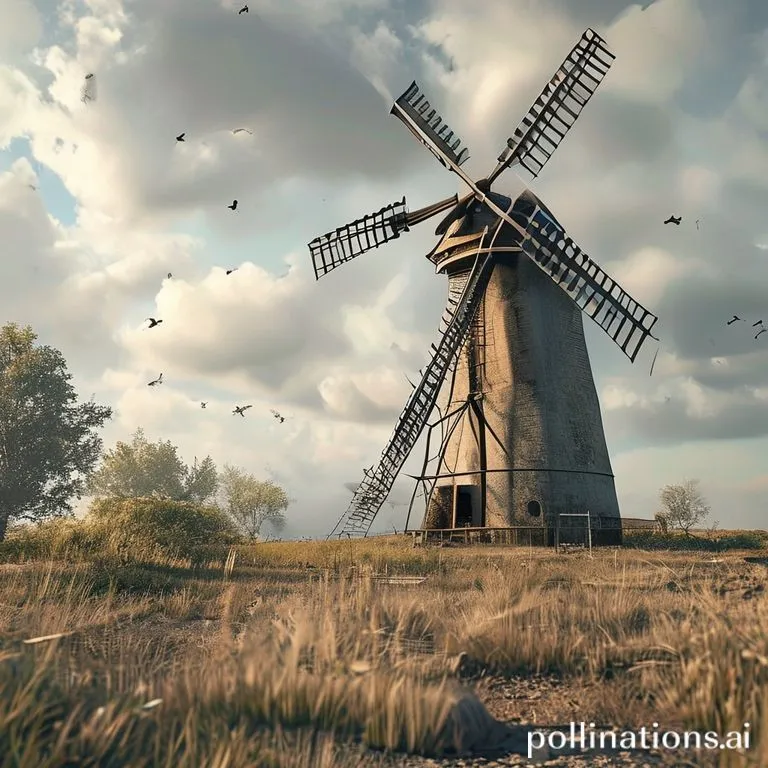
Brief description
A windmill is a structure that converts the kinetic energy of the wind into rotational energy using sails or blades. This energy is used to grind grain, pump water, or drive other machinery.
Use / Function
- Milling: Grinding grain into flour (gristmill).
- Pumping: Draining wetlands or pumping water for irrigation (windpump).
- Sawing: Cutting timber in sawmills.
- Industrial: Crushing seeds for oil, processing Spices, or fulling cloth.
- Scale: Industrial / Local community.
Operating principle
- Capture: Wind pushes against the angled sails or blades, creating lift and drag that rotates the windshaft.
- Transmission: The windshaft (horizontal or slightly inclined) connects to a large brake wheel.
- Gearing: The brake wheel drives a wallower (lantern gear) on a vertical main shaft, converting the motion from horizontal to vertical.
- Application: The vertical shaft drives the millstones (via a spur wheel and stone nuts) or a scoop wheel/Archimedes’ screw for pumping.
How to create it
- Foundation: Build a stable base (brick, stone, or timber trestle) to support the weight and resist wind forces.
- Structure: Construct the tower or body. For a “Post Mill,” the whole body rotates on a central post. For a “Tower Mill,” only the cap rotates.
- Sails: Construct the framework for the sails (usually 4) from light, strong wood. Cover with canvas (fabric) sails that can be adjusted based on wind speed.
- Mechanism: Install the windshaft, brake wheel, vertical shaft, and gearing. Use hard wood (like oak) or iron.
- Millstones: Install the bedstone (fixed) and runner stone (rotating).
- Orientation: Add a tail pole or fantail to manually or automatically turn the sails into the wind.
Materials needed
- Structure: Strong timber (oak) or masonry (brick/stone) for the tower.
- Sails: Light timber lattice and strong fabric (canvas) or wooden shutters.
- Gears: Hardwood (apple, hornbeam) or cast iron for durability.
- Millstones: Hard, abrasive stone (burrstone, granite).
- Rope: For controlling the sails and brake.
Variants and improvements
- Post Mill: The earliest type; the whole building turns to face the wind. Limited size.
- Tower/Smock Mill: Only the top cap rotates. Allows for a larger, more stable building.
- Fantail: A small fan at the back that automatically turns the cap into the wind.
- Spring/Patent Sails: Shutters that open/close automatically to regulate speed, replacing manual canvas handling.
Limits and risks
- Intermittency: Does not work without wind; useless in calm weather.
- Storms: High winds can destroy the sails or burn down the mill (friction fire) if the brake fails.
- Maintenance: Sails wear out quickly; gears need constant greasing (animal fat).
- Safety: The rotating sails are heavy and fast; being struck is fatal. Brake failure can lead to runaway speed.