Generated with AI3 min read
Windcatcher (Badgir)
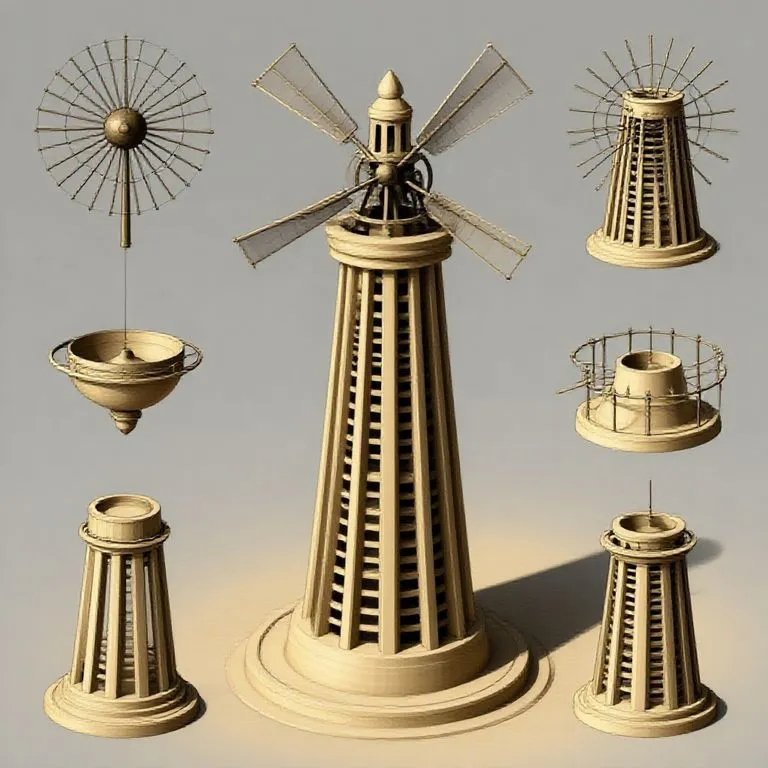
A windcatcher (or Badgir in Persian) is a traditional architectural element used to create natural ventilation in buildings. It is essentially a tall chimney with openings at the top, designed to “catch” the wind and direct it inwards, or to suction hot air outwards.
Use / Function
Its function is to cool interior spaces in hot climates, especially in desert areas.
- Primary Use: Ventilation and cooling of homes and water cisterns.
- Scale: Architectural (integrated into the building).
Operating Principle
The windcatcher can work in three ways, often simultaneously:
- Wind Catching (Positive Pressure): Openings facing the prevailing wind “catch” the air and force it down the duct into the rooms, displacing stale air.
- Suction Effect (Negative Pressure): If the wind blows over an opening not facing it, low pressure (Venturi effect) is created, suctioning hot air from inside to outside.
- Stack Effect: Even without wind, hot air inside tends to rise up the tower and escape, creating a draft of fresh air entering through lower windows.
How to Create It
Basic Structure
It is a masonry tower (brick, adobe, or stone) rising above the building’s roof.
- Ducts: The tower interior is usually divided vertically into several ducts (commonly 4 or 8) by partitions. This allows the tower to function independently of wind direction (one side catches wind while the opposite extracts air).
- Openings: Long windows at the top.
Technical Level Required
- Intermediate/Advanced: Requires masonry skills and understanding of local prevailing winds.
Materials Needed
- Brick or Adobe: Ideal materials for their thermal mass. They heat up slowly during the day and release heat at night.
- Wood: To reinforce the structure and create internal partitions or support beams.
- Mortar: To bind the bricks.
Variants and Improvements
- Unidirectional Badgir: Has a single opening facing the prevailing wind (common in areas with constant winds).
- Multidirectional Badgir: Has openings on all 4 sides to catch winds from any direction.
- Combination with Water (Qanat): Often, the windcatcher leads air over an underground water channel or an indoor fountain. The dry air evaporates some of the water, cooling drastically and increasing humidity, providing superior thermal comfort.
Limits and Risks
- Dust and Sand: In sandstorms, the tower can introduce dust into the house. Traditional versions have wooden doors or dampers to close them in these cases.
- Heat Loss in Winter: If they cannot be sealed tightly, they will cool the house excessively in winter.
- Animals: Needs grilles to prevent the entry of birds or insects.