Generated with AI3 min read
Wheelbarrow
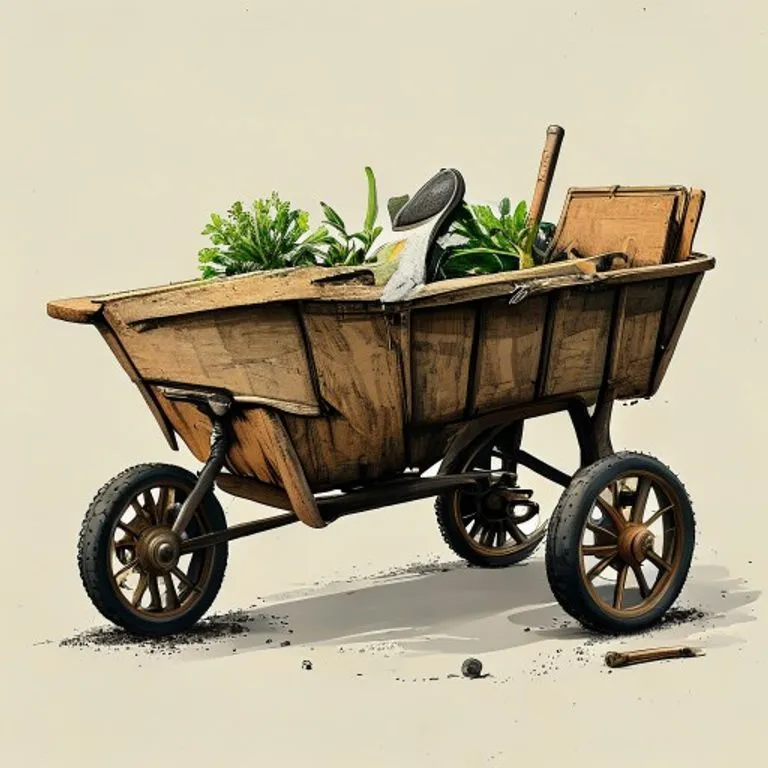
Brief description
A small hand-propelled vehicle, usually with just one wheel, designed to be pushed and guided by a single person using two handles at the rear. It is used for carrying loads that are too heavy or bulky for a person to carry by hand.
Use / Function
- Primary use: Transporting loose materials (soil, gravel, manure) and heavy objects over short distances.
- Secondary uses: Gardening, construction, and moving harvests.
- Scale: Domestic, agricultural, and construction sites.
Operating principle
- Second-Class Lever: The wheelbarrow acts as a lever where the wheel is the fulcrum, the load is in the middle, and the effort (the user’s lift) is applied at the handles.
- Weight Distribution: By placing the load close to the wheel, a large portion of the weight is transferred directly to the ground through the wheel, while the user only supports a fraction of the weight needed to balance and move the vehicle.
How to create it
1. Wooden Wheelbarrow (Traditional)
- Level: Intermediate.
- Frame: Two long wooden poles that serve as both the handles and the support for the wheel.
- Wheel: A wooden disk or a spoked wheel, reinforced with an iron rim if possible. It is mounted on an Axle at the front.
- Box/Tray: A wooden container or flat bed built over the frame to hold the load.
- Legs: Two wooden supports near the handles to allow the wheelbarrow to stand level when at rest.
2. Metal Wheelbarrow (Modern)
- Level: Advanced (requires welding).
- Frame: Tubular steel for strength and lightness.
- Tray: A pressed steel or plastic tub.
- Wheel: A rubber tire (pneumatic or solid) on a metal rim for smoother movement over uneven ground.
Materials needed
- Frame/Handles: Wood or Steel.
- Wheel: Wheel, Axle.
- Tray: Wood, Iron, or Steel.
- Fasteners: Nails, bolts, or screws.
Variants and improvements
- Flatbed Wheelbarrow: Without a tray, used for carrying logs, stones, or bags.
- Two-Wheeled Cart: Provides more lateral stability but is harder to maneuver on narrow paths or uneven terrain.
- Chinese Wheelbarrow: Features a large central wheel with the load placed directly over it, allowing for much heavier loads to be moved with less effort.
Limits and risks
- Balance: Single-wheeled versions can tip over sideways if the load is unbalanced or the ground is very uneven.
- Physical Strain: While it reduces lifting effort, it still requires significant arm and back strength to guide and push, especially uphill.
- Terrain: Ineffective in deep mud or very soft sand unless a wide wheel or a plank path is used.