Generated with AI2 min read
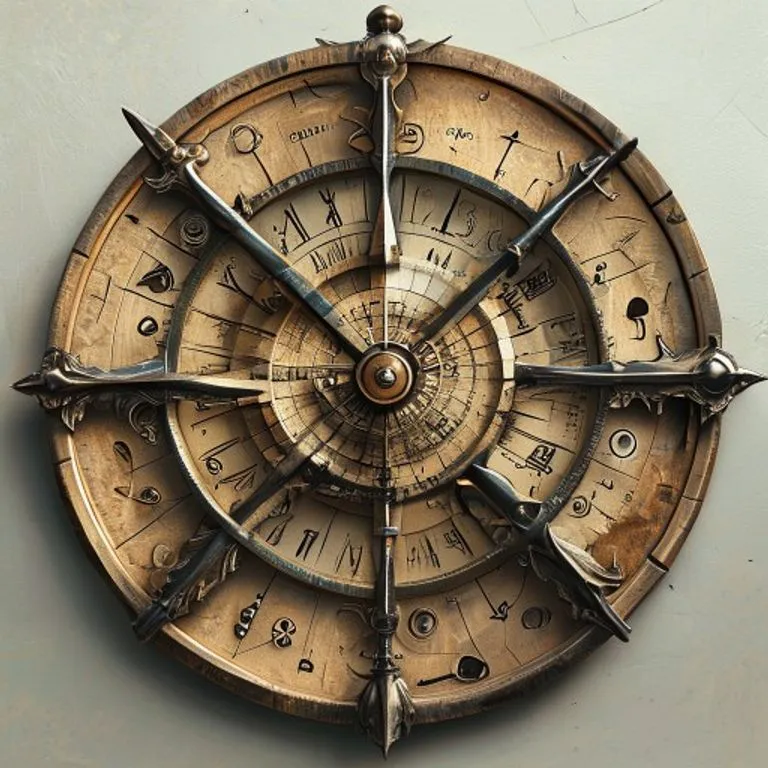
Sundial
Made of
Brief description
A sundial is a device that tells the time of day when there is sunlight by the apparent position of the Sun in the sky.
Use / Function
- Timekeeping: Indicating the time of day.
- Navigation: Determining latitude and direction (North/South).
- Decoration: Garden ornament.
Operating principle
As the sun moves across the sky, it casts a shadow from a gnomon (a thin rod or sharp edge) onto a flat plate (the dial). The position of the shadow indicates the time.
- Gnomon Alignment: Must be parallel to the Earth’s axis of rotation (pointing to the celestial pole).
How to create it
- Base: Create a flat surface (horizontal, vertical, or inclined).
- Gnomon: Install a rod at an angle equal to the local latitude.
- Alignment: Orient the gnomon to point True North (in Northern Hemisphere) or True South (in Southern Hemisphere).
- Marking: Mark the shadow position at each hour using a reliable clock or by geometry.
- Technical level: Intermediate (requires astronomical knowledge).
Materials needed
- Essential: Stone or metal for durability outdoors.
- Tools: Compass, level, protractor.
Variants and improvements
- Horizontal dial: The most common garden type.
- Vertical dial: Mounted on walls.
- Equatorial dial: The dial plate is parallel to the equator.
- Analemmatic dial: The gnomon is vertical and moved depending on the date.
Limits and risks
- Night/Cloud: Only works when the sun is shining.
- Equation of Time: Solar time varies from clock time throughout the year (up to ~16 mins).
- Latitude: A fixed dial only works accurately at the latitude it was designed for.