Generated with AI3 min read
Solar Still
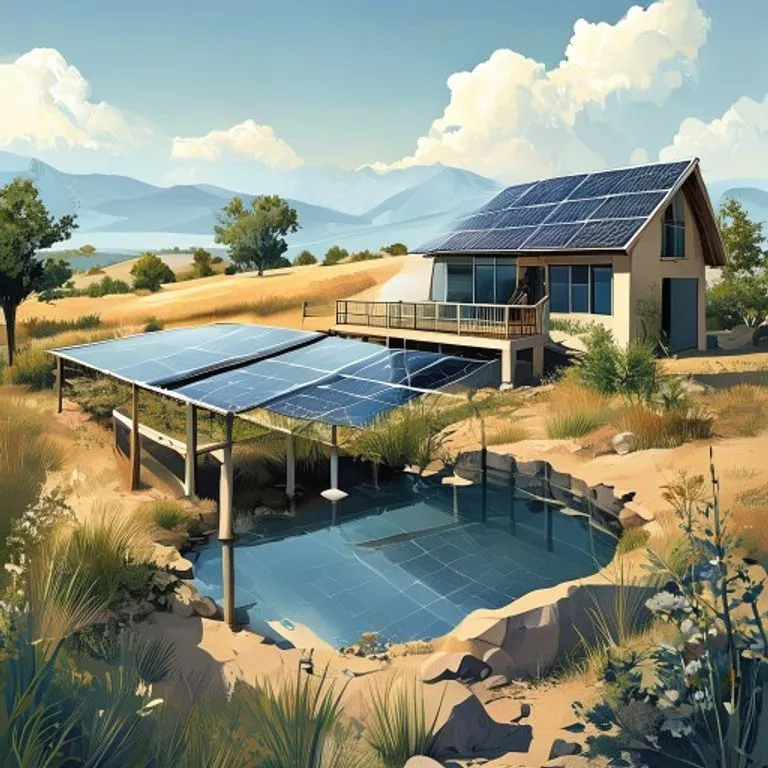
Brief description
A device that uses solar energy to purify water. It evaporates impure water and collects the pure condensate, effectively removing salts, heavy metals, and pathogens.
Use / Function
- Primary use: Producing potable water from salt water or contaminated sources.
- Secondary uses: Desalination, recovery of water from soil or plants in survival situations.
- Scale: Domestic / Individual.
Operating principle
The solar still replicates the natural water cycle (evaporation and condensation) on a small scale.
- Evaporation: Solar radiation passes through a transparent cover and heats the impure water in a basin. The water turns into vapor, leaving impurities (salts, bacteria, etc.) behind.
- Condensation: The vapor rises and touches the cooler underside of the transparent cover, where it condenses back into liquid droplets.
- Collection: Due to the slope of the cover, the droplets trickle down into a separate, clean collection container.
How to create it
Minimum functional version (Basin Type)
- Basin: A shallow container or pit lined with a dark, waterproof material (like Clay or black Plastic) to hold the impure water.
- Cover: A sheet of Glass or Plastic placed over the basin at an angle.
- Collection Trough: A clean channel or small container placed at the lowest point of the cover’s slope.
- Seal: Ensure the edges are airtight to prevent vapor from escaping.
Technical level
Basic. Can be constructed with improvised materials.
Materials needed
- Essential materials:
- Tools:
- Shovel (if digging a pit), basic cutting tools.
- Substitutes:
- A hole in the ground with green vegetation can serve as the “impure water” source in emergencies.
Variants and improvements
- Pit Still: A survival version dug into the ground, using soil moisture or added vegetation.
- Wick Still: Uses a dark cloth to increase the surface area of evaporation.
- Multi-effect Still: Reuses the latent heat of condensation to power further evaporation stages, increasing efficiency.
Limits and risks
- Output: Relatively low production rate (usually 1-4 liters per day depending on size and sun).
- Sunlight: Dependent on clear skies and strong solar radiation.
- Contamination: If the collection container is not kept clean, the purified water can become re-contaminated.
- Volatile compounds: Some chemicals with boiling points lower than water may evaporate and condense along with the water.