Generated with AI3 min read
Solar Furnace
Brief description
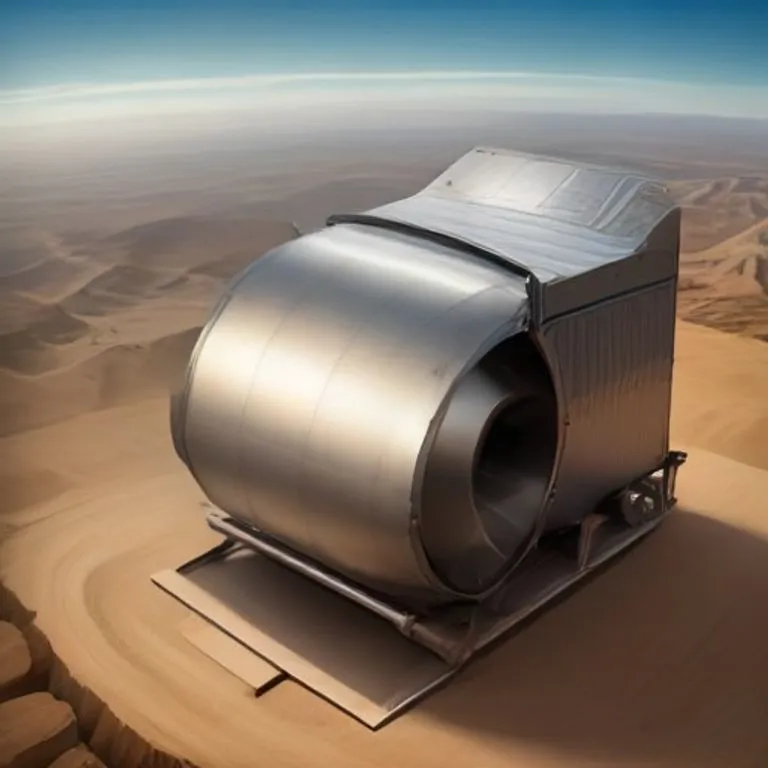
A solar furnace is a structure that uses concentrated solar power to produce high temperatures, typically for industrial manufacturing, metallurgy, or chemical processing. It uses parabolic mirrors or heliostats to focus sunlight onto a single focal point without relying on fossil fuels or electricity.
Use / Function
- Metallurgy & Smelting: Melting metals, producing high-purity alloys, and refining materials without chemical contamination from combustion gases.
- Material Testing: Subjecting ceramics, heat shields, and refractory materials to extreme thermal stress.
- Chemical Synthesis: Driving high-temperature endothermic chemical reactions, such as solar thermal hydrogen production or lime calcination.
- Scale: Ranges from small experimental parabolic dishes (generating several hundred degrees Celsius) to massive multi-megawatt industrial facilities capable of reaching over 3,000°C.
Operating principle
- Light Collection: Flat tracking mirrors (heliostats) track the sun’s trajectory across the sky and reflect parallel rays of sunlight toward a large parabolic collector.
- Parabolic Focus: The concave parabolic mirror focuses all incoming parallel rays onto a single central target area (the focal point).
- Concentration & Heat Generation: Optical concentration factors ranging from hundreds to tens of thousands multiply the solar flux, raising the temperature at the target to extreme levels in seconds.
- Clean Heating: Energy is transferred purely via electromagnetic radiation, creating a completely clean, non-contaminating thermal environment inside a reaction chamber or crucible.
How to create it
- Parabolic Frame: Construct a rigid, parabolic structural frame using Steel or wood to support reflective elements with geometric accuracy.
- Reflective Surface: Mount high-reflectivity silvered Glass Mirrors or polished aluminum sheets onto the parabolic framework.
- Tracking Heliostat: Build a moveable flat mirror array mounted on an adjustable dual-axis frame to direct sunlight continuously toward the parabolic dish as the sun moves.
- Focal Receiver: Install a refractory crucible or insulated target chamber at the exact geometric focus of the parabola using fireproof Bricks or ceramic insulation.
- Alignment & Calibration: Align all mirrors precisely so that reflected sunlight converges strictly on the receiver target.
Materials needed
- Reflector: High-quality Mirrors or polished aluminum.
- Structural Support: Steel tubing, frame joints, or timber.
- Target Vessel: Refractory Bricks, ceramics, or graphite crucible.
- Tracking Mechanism: Gears, levers, or automated drive motors for tracking the sun.
Variants and improvements
- Simple Parabolic Dish: Direct single-stage parabolic reflector suitable for smaller applications; must turn directly toward the sun.
- Heliostat & Stationary Concentrator: Uses moving flat mirrors on the ground to reflect light into a large fixed parabolic mirror, allowing the heating chamber to remain static.
- Solar Power Tower: Uses thousands of ground-based heliostats focusing light onto a central receiver atop a tower to heat molten salt or steam for electricity generation.
Limits and risks
- Weather Dependence: Completely reliant on clear, unclouded direct sunlight; performance drops to zero during night or heavy overcast.
- Extreme Radiation Hazards: Concentrated solar beams cause immediate blindness and catastrophic skin burns; protective optical shielding is mandatory.
- Thermal Shock: Rapid temperature changes at the focus can crack unheated ceramic materials or crucibles.