Generated with AI3 min read
Electric Arc Furnace
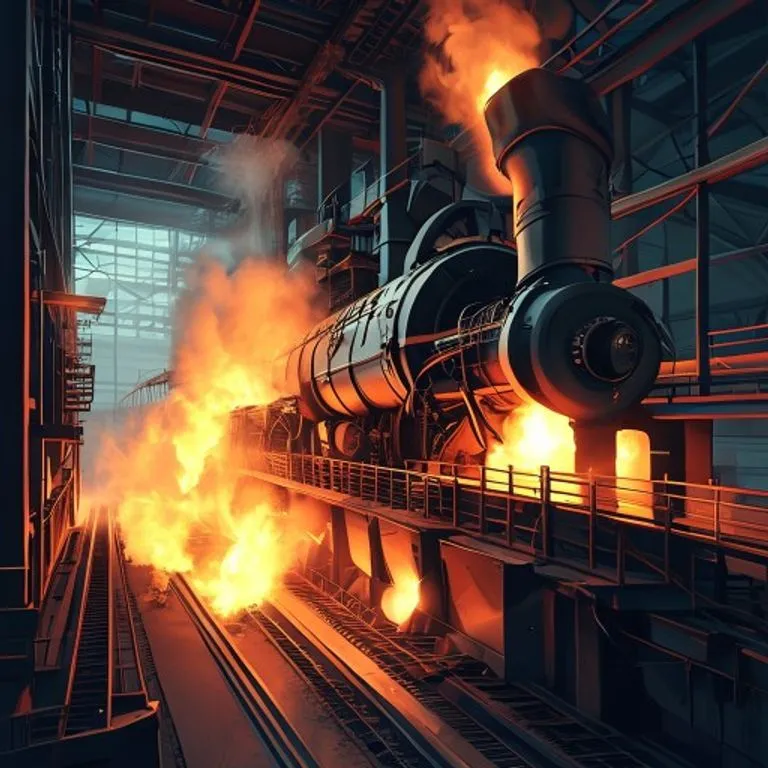
Brief description
An electric arc furnace (EAF) is a furnace that heats charged material by means of an electric arc. It is used primarily for steelmaking and smelting of high-melting-point materials.
Use / Function
- Primary use: Smelting and refining steel (especially from scrap).
- Secondary uses: Production of ferroalloys, calcium carbide, and high-purity glass or ceramics.
- Scale: From laboratory-sized units to large industrial furnaces.
Operating principle
Electrical Arcing:
- The Electrodes: Usually made of Graphite because of its high melting point and electrical conductivity.
- The Arc: A high-voltage, high-current electrical discharge (the arc) is struck between the electrodes or between the electrodes and the material to be melted (the charge).
- Heat Generation: The arc produces temperatures up to 3,500°C (6,300°F), far exceeding the melting point of most metals.
- Melting: The radiant and convective heat from the arc melts the charge directly.
How to create it
1. The Furnace Body
- Construct a vessel lined with refractory materials (firebrick, clay, or magnesium oxide) that can withstand extreme heat.
- Include a hearth for the molten metal and a roof that can be moved or has ports for electrodes.
2. The Electrodes
- Use thick graphite rods.
- Create a mechanism to lower and raise the electrodes to control the arc length and intensity.
3. Electrical System
- Requires a massive power supply (transformer) capable of delivering low voltage but extremely high current.
- Heavy copper cables and busbars are needed to carry the current to the electrode holders.
4. Cooling
- For industrial versions, water-cooled panels and electrode holders are essential to prevent the structure from melting.
Materials needed
- Graphite: For the electrodes.
- Refractories: Firebricks or heat-resistant clay for the lining.
- Steel/Iron: For the furnace shell.
- Copper: For high-current electrical connections.
- Power Source: A high-capacity Electric Generator or power grid connection.
Variants and improvements
- Induction Furnace: Uses alternating magnetic fields to heat the metal directly; cleaner but generally less powerful for large scrap melting.
- Vacuum Arc Remelting (VAR): Used for high-purity metals like titanium, melting them in a vacuum to prevent oxidation.
Limits and risks
- Power Consumption: Requires enormous amounts of electricity.
- Noise and Flicker: The arc is extremely loud and causes electrical fluctuations on the power grid.
- Radiation: Intense UV and infrared radiation from the arc; requires shielding and eye protection.
- Explosion: Moisture in the charge can cause violent steam explosions when it hits molten metal.
Related inventions
- Graphite: Essential electrode material.
- Electric Generator: Necessary for power.
- Arc Lamp: Uses the same basic principle of electrical arcing for light.