Arc Lamp
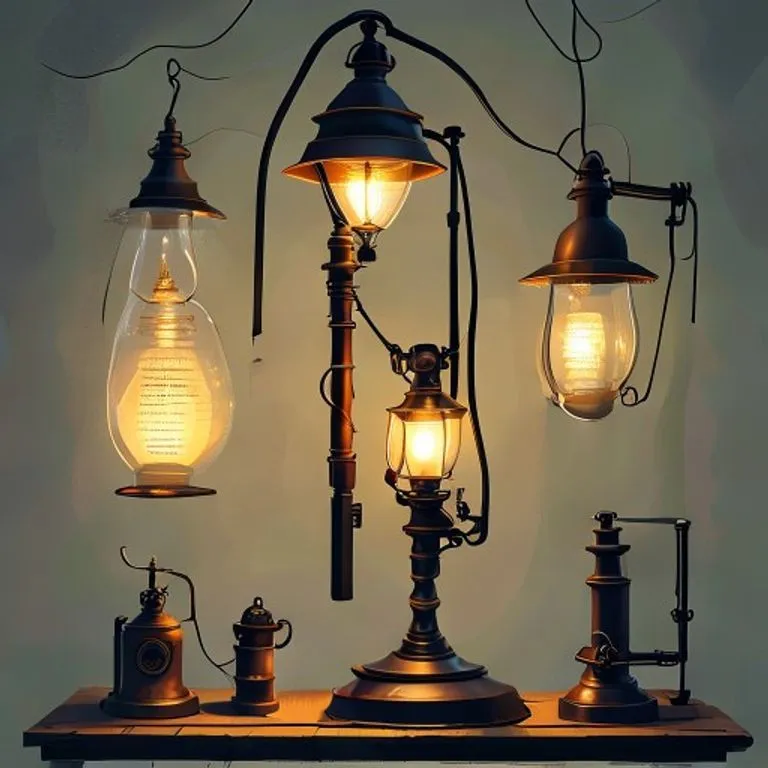
Brief description
An arc lamp is a type of electric lamp that produces light by an electric arc (a continuous plasma discharge) between two electrodes. It was the first practical type of electric light and provided extremely bright illumination, suitable for lighthouses, factories, and street lighting.
Use / Function
- Public Lighting: Illuminating city streets, squares, and large public spaces.
- Industrial Lighting: Providing intense light for factories, shipyards, and railway yards.
- Searchlights: Projecting powerful beams of light for maritime navigation or military use.
- Projection: Used in early movie projectors and stage lighting.
Operating principle
The lamp works by creating an electrical discharge through ionized gas (air) between two electrodes.
- Electrodes: Usually made of Charcoal or graphitized carbon.
- Strike: The two electrodes are brought together to complete a circuit and then slowly pulled apart.
- Arc: As they separate, the air between them ionizes, creating a plasma “arc” that is intensely bright and hot.
- Light: Most of the light comes from the white-hot tips of the carbon electrodes and the plasma of the arc itself.
- Consumption: The carbon electrodes slowly burn away and must be continuously adjusted to maintain the correct gap.
How to create it
1. Power Source
Requires a high-voltage DC source, such as a large Battery bank (Voltaic pile) or a Simple Electric Generator (Dynamo).
2. Electrodes
Shape two rods from Charcoal or graphite. For longer life, they can be copper-coated.
3. Regulator (The Hard Part)
Because the carbons burn away, the gap increases until the arc extinguishes. A manual or automatic mechanism is needed.
- Manual: A screw mechanism to move the rods.
- Automatic: An Electromagnet and gravity system (like the Yablochkov candle or the Serrin regulator) that automatically maintains the gap.
4. Housing
A frame of Iron and a Glass enclosure to protect the arc from wind and reduce the fire hazard.
Materials needed
- Charcoal: For the electrodes.
- Copper: For wiring and electrode coating.
- Iron: For the lamp structure and electromagnets.
- Glass: For the outer globe.
Variants and improvements
- Yablochkov Candle: Two carbon rods placed side-by-side with an insulating layer between them; they burn down together like a candle, requiring no regulator.
- Enclosed Arc: Placing the arc in a small glass globe to restrict oxygen, making the carbons last much longer.
- Mercury-Arc Lamp: Uses mercury vapor instead of carbon rods, leading to modern fluorescent and HID lighting.
Limits and risks
- Extreme Heat: The arc is hot enough to melt most materials.
- UV Radiation: Produces significant ultraviolet light, which can damage eyes and skin.
- Toxic Fumes: Carbon arcs produce carbon monoxide and nitrogen oxides; requires ventilation.
- Maintenance: Carbon rods must be replaced frequently (often every few hours).
- Flicker and Noise: Arc lamps often buzz and flicker as the arc moves.
Related Inventions
- Battery
- Simple Electric Generator
- Electromagnet
- Incandescent Light Bulb (The cleaner, quieter successor)