Generated with AI3 min read
Cloud Chamber
Brief description
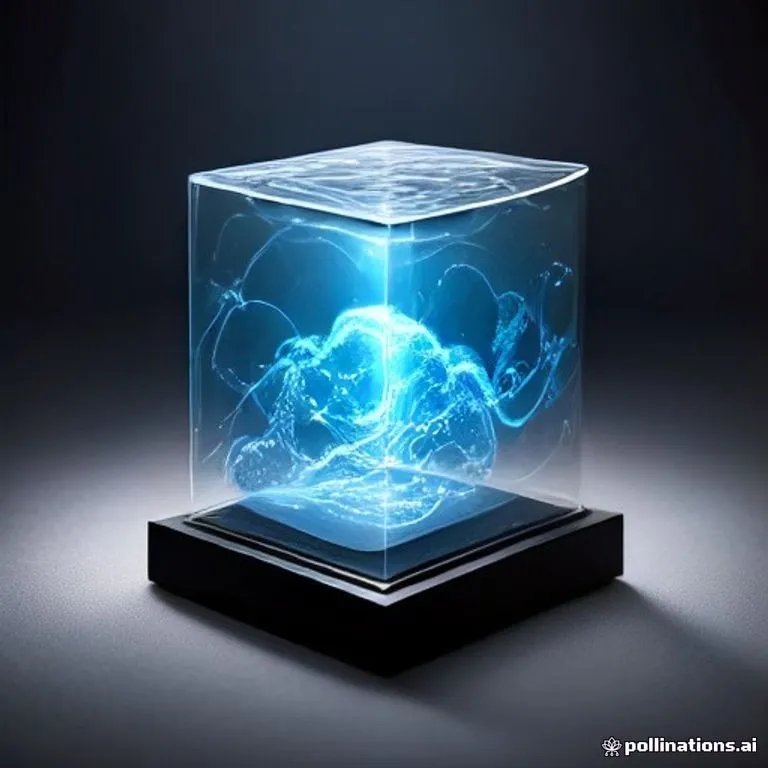
A cloud chamber (or Wilson cloud chamber) is a sealed particle detector that renders the paths of ionizing radiation visible. It relies on supersaturated vapor that condenses around ions created along the trajectory of charged subatomic particles.
Use / Function
- Radiation Detection: Visualizes cosmic rays, alpha particles, beta particles, and other forms of ionizing radiation without electronic sensors.
- Particle Identification: Distinct track lengths and thicknesses allow identification of particle types (e.g., short, thick tracks for alpha particles; thin, wispy tracks for beta particles).
- Fundamental Physics Research: Served as a foundational instrument in early particle physics and nuclear discovery.
- Scale: Small tabletop laboratory equipment.
Operating principle
The chamber operates on the principle of supersaturation created by a temperature gradient.
- Supersaturated Vapor: Isopropyl or ethyl alcohol evaporates near the warm top of the container and sinks toward the cold bottom, creating a region of supersaturated alcohol vapor.
- Ionization: As energetic charged particles pass through the chamber, they strip electrons from air and alcohol molecules along their paths, creating lines of ions.
- Condensation: The ions act as nucleation points. Vapor instantly condenses onto these ions, forming visible droplets that trace the trajectory of the particle.
How to create it
- Chamber Base: Prepare a flat, dark metal plate at the bottom of a transparent container made of Glass to provide contrast for the white mist tracks.
- Absorbent Top: Attach felt or sponges soaked in high-purity Alcohol (isopropyl or ethanol) near the inside top of the chamber.
- Sealing: Seal the transparent chamber to the base to prevent air currents and maintain a closed system.
- Cooling: Place the base plate on top of dry ice or an active cooling plate to create a steep vertical temperature gradient.
- Illumination: Shine a concentrated, horizontal light beam through the glass side of the chamber across the bottom cold zone.
- Observation: Once supersaturated vapor forms, observe thin white condensation trails appearing illuminated against the dark base.
Materials needed
- Chamber Body: High-transparency Glass or clear container.
- Base Plate: Dark, heat-conductive Metal plate.
- Vapor Source: High-purity isopropyl or ethyl Alcohol.
- Absorbent Pad: Felt or sponge to hold the alcohol.
Variants and improvements
- Diffusion Cloud Chamber: Continuously cooled bottom creates a steady supersaturated layer without needing expansion valves.
- Expansion Cloud Chamber: Uses sudden volume expansion to adiabatically cool the vapor.
- Bubble Chamber: Uses superheated liquid instead of vapor, offering higher density for detecting high-energy particles.
Limits and risks
- Flammability: Concentration of alcohol vapor presents a fire risk if exposed to open sparks or flames.
- Cold Hazards: Dry ice causes severe cold burns upon direct skin contact.
- Short Lifetime: Requires continuous replenishment of cold source or alcohol vapor.