Generated with AI4 min read
Clinometer
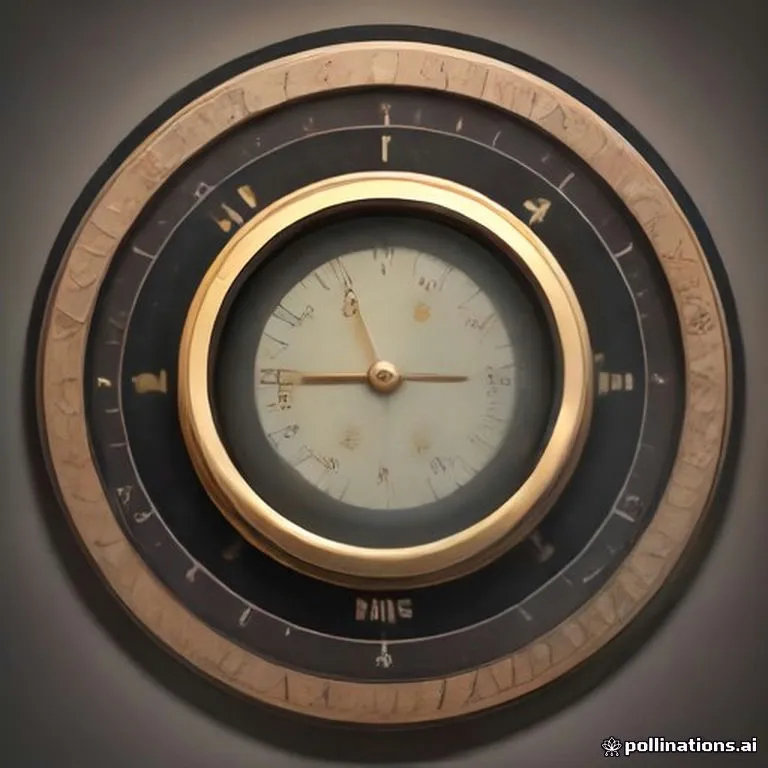
Brief description
A clinometer (or inclinometer) is an optical and mechanical surveying instrument used to measure angles of slope, elevation, or depression of distant objects and terrain relative to gravity. Tracing its lineage through the astrolabe, artillery gunner’s quadrant, and nineteenth-century Abney hand level, the clinometer enabled civil engineers, miners, artillery officers, and foresters to rapidly calculate heights, survey canal gradients, and determine structural verticality in field conditions.
Use / Function
- Topographical Gradient Surveying: Measuring road inclines, railway grades, aqueduct slopes, and drainage fall across rough topography.
- Height Determination: Calculating the vertical heights of trees, geological cliffs, architectural towers, and fortification ramparts using right-angle trigonometry.
- Artillery and Ballistics: Setting elevation angles on field cannons and siege mortars for indirect ballistic fire.
- Mining and Geology: Measuring geological stratum dip, strike, and mine shaft descent angles.
Operating principle
- Gravity Reference: The instrument utilizes a gravity-seeking element—either a weighted pendulum, a damped spirit level vial, or a free-swinging magnetic/weighted compass drum.
- Sighting Collimation: The user sights a distant target through a peep-sight aperture and a front crosshair or reticle wire in a sighting tube.
- Internal Optical Reflection: A 45-degree semi-silvered prism or angled mirror within the tube reflects an image of the internal bubble vial or scale into the observer’s eye alongside the distant target.
- Angular Adjustment: An index arm attached to an external graduated protractor arc rotates until the spirit bubble centers precisely on the crosswire while the distant target remains aligned.
- Trigonometric Calculation: Reading the angular arc (in degrees, slope percentage, or gradient ratio) allows direct calculation of height via the relation $h = d \cdot \tan(\theta) + h_{\text{eye}}$, where $d$ is ground distance.
How to create it
- Construct the Sighting Tube: Form a rectangular or tubular sighting chassis from cast iron or brass tube with an eyepiece aperture at one end and horizontal crosshair wire at the objective end.
- Mount the Semi-Reflecting Mirror: Position an optical glass prism or angled mirror inside the upper half of the sight tube to split the visual field horizontally.
- Machine the Graduated Arc: Engrave an external semi-circular brass quadrant divided in degrees ($-60^\circ$ to $+60^\circ$) and slope percentage gradients.
- Attach Spirit Level & Index Arm: Mount a sensitive curved glass spirit level vial onto a swinging index arm pivoted concentric to the graduated arc.
- Incorporate Vernier Scale: Machine a fine vernier scale on the index arm or provide a tangent slow-motion screw for readings down to arc-minutes.
- Calibrate Horizontal Zero: Set the sight tube on a verified horizontal surface plate, verify the spirit bubble centering, and zero the index mark against the engraved protractor.
Materials needed
- Essential: Brass for machined quadrant arcs, index levers, and sighting tubes; optical Glass for the spirit level vial and split reflection mirror; Iron for weighted leveling bases.
- Tools: Dividing engine or precision circular engraving rig, jewelers’ lathe, collimator or spirit level bench for zero-point alignment.
- Substitutes: A simple plumb-bob hanging from the center of an inverted wooden protractor serves as an effective field clinometer.
Variants and improvements
- Abney Level: Sighting tube equipped with a rotatable spirit level viewed through an internal split mirror, operated handheld.
- Weighted Pendulum Clinometer: Sighting tube where a weighted needle swings across an enclosed circular dial, dampening instantly without liquid vials.
- De Lisle Clinometer: Handheld mirror clinometer designed for military trench construction and fast trail grading.
- Artillery Gunner’s Quadrant: Heavy bronze L-shaped frame fitted with a graduated quadrant and spirit level, inserted directly into the cannon bore.
Limits and risks
- Parallax and Hand Shake: Handheld sighting without a tripod or monopod invites optical tremor and sight alignment drift on long-range sightings.
- Thermal Bubble Expansion: In alcohol spirit vials, significant temperature swings alter bubble length, requiring careful symmetry reading against vial graduation lines.
- Distance Measurement Errors: Calculating height through $h = d \tan(\theta)$ depends heavily on baseline distance accuracy; errors in $d$ multiply the resulting elevation error.