Generated with AI3 min read
Charcoal Kiln
Brief description
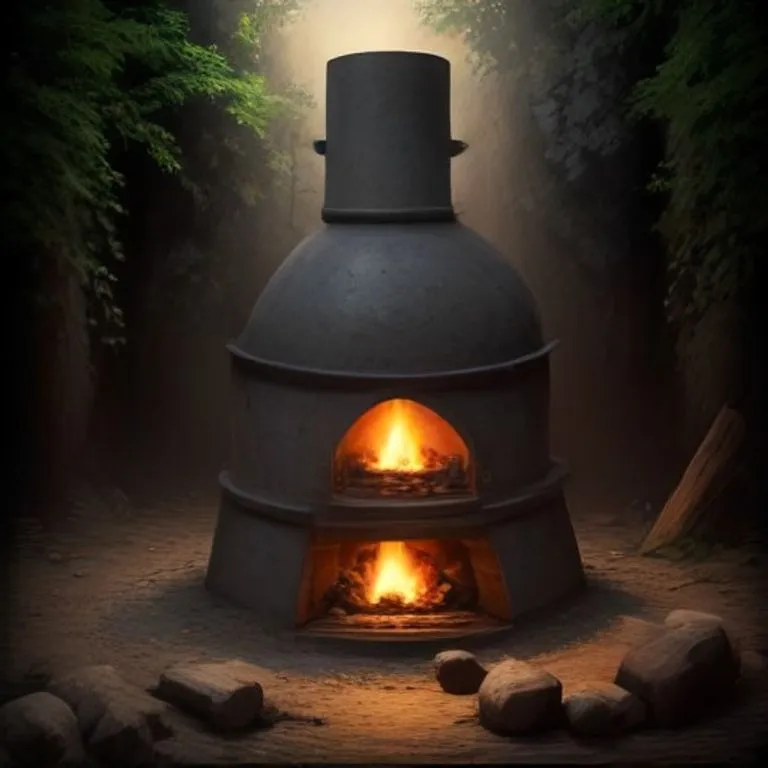
A charcoal kiln is a specialized enclosure designed for pyrolyzing wood under controlled, low-oxygen conditions. It transforms raw wood into carbonized charcoal, an essential high-density fuel required for high-temperature metallurgy and iron smelting.
Use / Function
- High-Temperature Fuel Production: Converts Wood into Charcoal, which burns hotter (exceeding 1100 °C) and cleaner than raw timber.
- Metallurgical Reducing Agent: Produces elemental carbon required for reducing iron ore in blast furnaces and bloomeries.
- Smokeless Fuel: Creates fuel that generates minimal smoke, ideal for blacksmith forging and indoor cooking.
Operating principle
The charcoal kiln relies on pyrolysis (destructive distillation):
- Dehydration: Heat from initial combustion evaporates remaining moisture from stacked wood (up to 200 °C).
- Thermal Breakdown: At temperatures between 280 °C and 500 °C, complex wood molecules (cellulose, hemicellulose, lignin) decompose in the absence of sufficient oxygen.
- Volatilization & Carbonization: Volatile organic compounds (tars, methanol, water vapor, wood gas) are driven off through vent holes, leaving behind a carbon-dense matrix (charcoal).
How to create it
Minimum functional version
- Prepare Ground Base: Clear a flat, circular bed on dry ground, sloping slightly toward the center for drainage.
- Erect Central Flue: Set up three or four wooden poles tied together vertically at the center to serve as a central chimney shaft.
- Stack Wood Tight: Pack dense billets of dry Wood tightly around the central flue in concentric vertical layers, tapering toward the top.
- Cover Shell: Seal the stack with a layer of turf, straw, and thick damp Clay or earth (10–15 cm), leaving small draft holes around the bottom rim and top flue.
- Ignite and Control Draft: Drop burning embers down the central flue. Once lit, plug the top chimney and regulate air entry using bottom vent holes to maintain slow smoldering without flame.
- Cool and Harvest: When white smoke turns thin and transparent blue, seal all vents completely with mud and allow to cool sealed for 24–48 hours before opening.
Required technological level
Basic to Intermediate. Requires careful monitoring of air vents to prevent total combustion into ash.
Materials needed
- Wood Supply: Dense hardwoods or softwoods cut into uniform logs (Wood).
- Sealing Layer: Damp Clay, mud, turf, or sod.
- Kiln Masonry (Optional for permanent versions): Heat-resistant Stone or Brick.
Variants and improvements
- Earth Mound / Earth Pit (Meiler): Primitive temporary mound covered in earth and turf; zero masonry required.
- Brick Hive Kiln: Permanent beehive-shaped brick masonry kiln providing higher carbon yield and weather resistance.
- Retort Kiln: Metal vessel with external heating; captures byproduct gases (wood tar, pyroligneous acid) for chemical processing.
Limits and risks
- Asphyxiation & Carbon Monoxide: Pyrolysis releases lethal concentrations of carbon monoxide ($\text{CO}$) and toxic volatile tars. Never operate in enclosed spaces.
- Accidental Ash Combustion: Excess air leakage will turn the entire charge into worthless ash instead of charcoal.
- Spontaneous Ignition: Hot uncooled charcoal absorbs oxygen rapidly upon exposure to air and can spontaneously catch fire.