Nitroglycerin
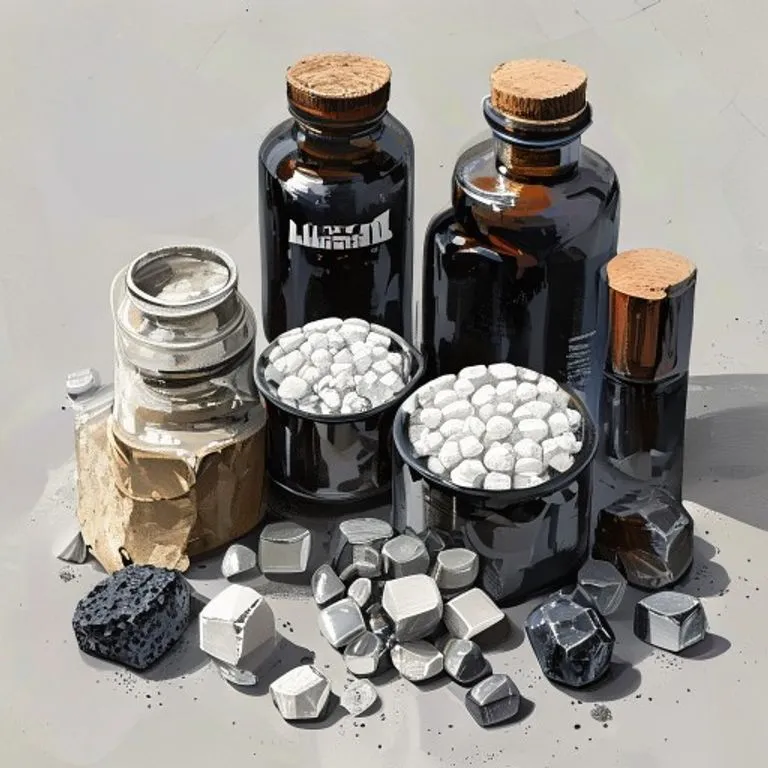
Nitroglycerin is a heavy, colorless, oily, explosive liquid. It is one of the most powerful and sensitive explosives known, and it is also used in medicine as a vasodilator to treat heart conditions.
Description of what it is like
- Appearance: A clear or slightly yellowish oily liquid.
- Sensitivity: Extremely sensitive to physical shock, friction, and heat. It is notorious for its instability in liquid form.
- Physiological Effect: Skin contact or inhalation of vapors causes rapid dilation of blood vessels, leading to severe “nitroglycerin headaches.”
Origin and where to find it
Nitroglycerin does not occur in nature. It is a synthetic compound first produced in 1847 by Ascanio Sobrero.
General synthesis principles
DANGER: Industrial production only. Nitroglycerin synthesis is extremely hazardous and requires specialized equipment and strict safety protocols.
The production involves the esterification of Glycerol with a mixture of concentrated Nitric Acid and Sulfuric Acid. The reaction is highly exothermic and requires constant, precise temperature monitoring to prevent a runaway thermal reaction that leads to detonation.
The resulting product must be thoroughly purified to remove residual acids, as impurities significantly increase its already high sensitivity to spontaneous decomposition.
Tools needed for industrial production
- Reaction Vessels: Specialized corrosion-resistant containers designed for heat dissipation.
- Cooling Infrastructure: Large-scale refrigeration or ice-water systems to manage the heat of the reaction.
- Monitoring Equipment: High-precision thermometers and agitators.
Common forms of use
- Explosive: Historically used for blasting in mining and construction, though almost exclusively in stabilized forms like Dynamite.
- Medicine: Used in highly diluted forms (tablets, patches, or sprays) to treat angina pectoris.
Possible substitutes
- Gunpowder: A much older and safer “low explosive” or propellant.
- Nitrocellulose: Another high explosive used in smokeless powders.
Limitations and common failures
- Instability: Liquid nitroglycerin is far too dangerous for general transport or handling.
- Thermal Sensitivity: High temperatures or sudden temperature changes can trigger detonation.
- Acidic Decomposition: Residual acid from manufacturing can cause the compound to become increasingly unstable over time.
Risks and safety
- Extreme Explosion Hazard: The primary risk is accidental detonation from shock, friction, or heat.
- Toxicity: It is readily absorbed through the skin and can cause dangerous drops in blood pressure.
Related materials
- Glycerol: The organic precursor.
- Nitric Acid: The nitrating agent.
- Sulfuric Acid: The catalyst for the reaction.
Related inventions
- Dynamite: The primary method for stabilizing nitroglycerin for practical use.
Properties
- Extremely Explosive
- Oily Liquid
- Colorless to Yellow
- Toxic (causes headaches)
- Vasodilator
Used for
- High Explosives
- Medicine (heart conditions)
- Precursor for Dynamite
Manufacturing / Process
Chemical nitration of glycerol using a mixture of concentrated nitric and sulfuric acids.