NaturalGenerated with AI2 min read
Glycerol (Glycerin)
C3H8O3
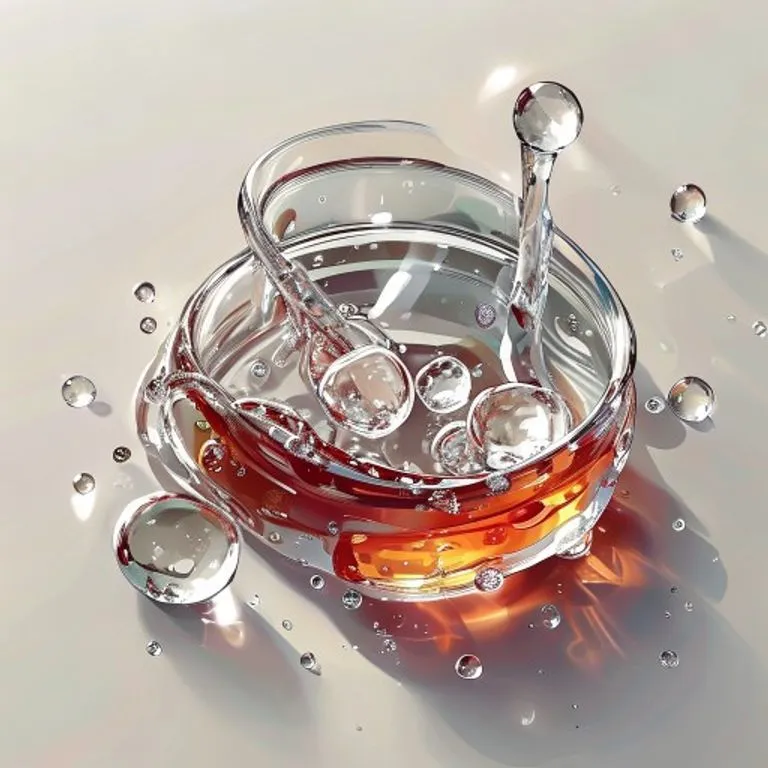
Glycerol, also known as glycerin, is a simple polyol compound. It is a colorless, odorless, viscous liquid that is sweet-tasting and non-toxic. It is a central component of all lipids known as triglycerides.
Description of what it is like
- Appearance: A thick, clear liquid, similar to a very heavy syrup.
- Taste: Distinctly sweet.
- Feel: Oily or slippery, but it is actually an alcohol, not an oil.
- Hygroscopy: It strongly attracts water from the air.
Origin and where to find it
Glycerol is found in all natural Animal Fat and vegetable oils in the form of triglycerides.
Minimum processing required
It is most commonly obtained as a byproduct of Soap manufacture.
- Saponification: Reacting fats with lye (sodium hydroxide).
- Separation: After soap is formed, a liquid remains (spent lye).
- Purification: The glycerol is extracted from this liquid through distillation.
Tools needed to work with it
- Distillation Apparatus: To purify it from the soap-making byproduct.
- Storage Containers: Glass or high-quality plastic.
Common forms of use
- Humectant: Added to food and cosmetics to keep them moist.
- Medicinal: Used in cough syrups and as a laxative.
- Chemical: The essential raw material for making Nitroglycerin.
Possible substitutes
- Sugar Syrups: For sweetness and some preservation, but lack the chemical properties.
- Propylene Glycol: A modern synthetic substitute in many industrial applications.
Limitations and common failures
- Water Absorption: If left open, it will dilute itself by absorbing atmospheric moisture.
- Purity: Crude glycerol from soap making contains salts and impurities that must be removed for medical or chemical use.
Risks and safety
- Generally Safe: Non-toxic and safe for skin contact.
- Combustion: Can burn at high temperatures, but not easily ignited.
Related materials
- Animal Fat: The source of glycerol.
- Soap: The process that releases glycerol.
- Water: Glycerol is fully miscible in water.
Properties
- Viscous
- Clear and Colorless
- Sweet-tasting
- Hygroscopic
- Non-toxic
Used for
- Medicine
- Cosmetics
- Food preservation
- Precursor for Nitroglycerin
- Lubricant
- Antifreeze
Manufacturing / Process
Byproduct of soap making (saponification of fats) or biodiesel production.