Cordite
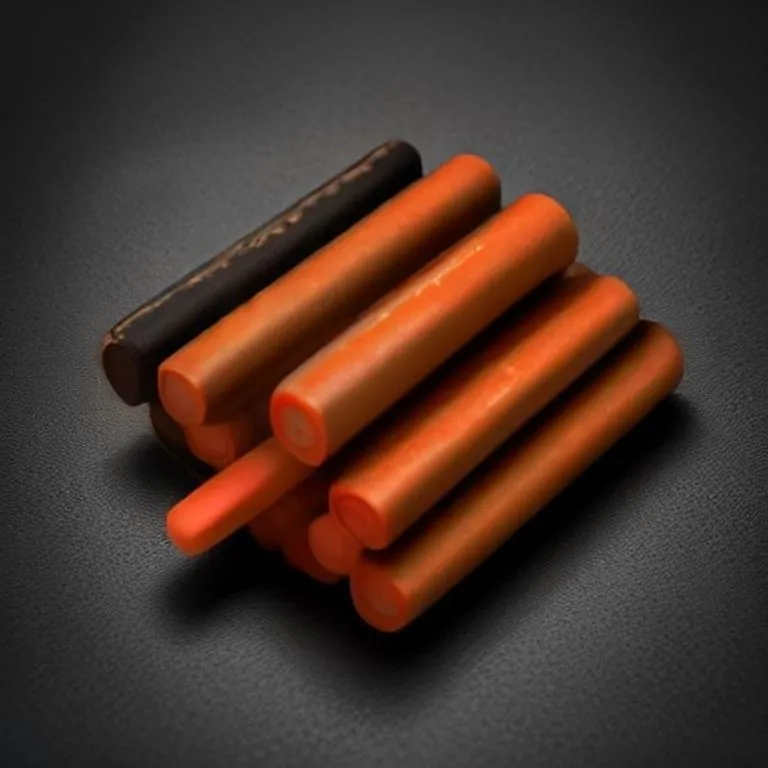
Cordite is a family of smokeless propellants developed in the late 19th century to replace traditional black gunpowder in military and industrial applications. As a double-base propellant, it combines the high explosive power of nitroglycerin with the structural stability of nitrocellulose, bonded together into a homogeneous plasticized material using acetone. Unlike black powder, cordite produces very little smoke, leaves minimal corrosive residue in barrels, and burns at a controlled, predictable rate rather than detonating instantly, making it highly effective for projecting bullets and shells.
Description of what it is like
- Appearance: Yellowish-brown to dark gray translucent cords, strands, or noodles, resembling thin spaghetti or solid wire.
- Texture: Tough, slightly flexible, and waxy or plastic-like to the touch.
- State: Solid at room temperature.
- Breakage: Difficult to break by hand; it stretches or bends before shearing, but can be cut cleanly with sharp tools.
- Combustion: Burns with a fierce, brilliant, smokeless flame when ignited in the open. When confined inside a sealed chamber (like a cartridge), it builds immense pressure rapidly to propel a projectile.
Origin and where to find it
Cordite is entirely synthetic and must be manufactured in a controlled chemical plant. It does not exist in nature.
- Components:
- Nitrocellulose: Also known as guncotton, prepared by nitrating cotton or wood pulp with nitric and sulfuric acids.
- Nitroglycerin: A powerful liquid explosive prepared by nitrating glycerol.
- Acetone: A volatile organic solvent used to dissolve and gelatinize the nitrocellulose and nitroglycerin mixture.
- Stabilizer: Vaseline or mineral jelly, added to prevent self-decomposition over time.
Minimum processing required
- Gelatinization: Nitrocellulose and nitroglycerin are mixed in a large kneading trough. Acetone is added as a solvent, turning the mixture into a dough-like plastic paste.
- Stabilization: A small amount of mineral jelly is incorporated to absorb acidic decomposition products, ensuring decades of safe shelf-life.
- Extrusion: The paste is loaded into hydraulic presses and extruded through specialized dies (hence the name “cord-ite”) to form long strands.
- Drying: The extruded cords are hung in heated drying rooms for several days to evaporate and recover the acetone, leaving behind a tough, solid propellant.
- Cutting: The dried cords are cut into precise lengths depending on the caliber of ammunition being produced.
Tools needed to work on it
- Kneading Machinery: Mechanical mixers designed to handle explosive pastes safely without generating sparks or friction heat.
- Extrusion Press: Hydraulic or mechanical presses fitted with fine dies.
- Drying and Recovery Chambers: Well-ventilated drying racks, ideally equipped with condenser systems to reclaim evaporated acetone.
- Non-Sparking Tools: Brass, bronze, or wooden implements to avoid static sparks.
Common forms of use
- Cords: Long strands bundled together inside large military artillery shells.
- Flakes/Granules: Cut or chopped cordite used in small-arms ammunition.
- Rods: Thick, solid tubes used as solid fuel rocket propellants.
Possible substitutes
- Black Gunpowder: The traditional precursor. However, black powder produces heavy black smoke, fouls gun barrels rapidly, and is highly sensitive to moisture.
- Single-Base Powder (Nitrocellulose-only): Excellent propellant, but offers slightly less propulsive energy per unit volume than cordite.
- Ballistite: A similar double-base powder that uses nitroglycerin and nitrocellulose but does not require acetone as a solvent, though it is more brittle and difficult to shape into large grains.
Limitations and common failures
- Temperature Sensitivity: Extreme heat can accelerate the degradation of the stabilizers, leading to spontaneous ignition or altered burn rates.
- Acetone Retention: If acetone is not fully dried out, the cordite will burn slowly and with significantly reduced power.
- Brittleness: Over time, or in sub-zero temperatures, cordite can become brittle. If the cords crack, their surface area increases, which can cause dangerously fast burning and explode the gun chamber.
Risks and safety
- Friction and Spark Hazard: Dry cordite can be ignited by static sparks, intense friction, or direct impact.
- Toxic Vapors: Synthesizing cordite involves nitroglycerin, which is highly toxic by skin contact and inhalation, causing severe headaches and cardiovascular issues.
- Spontaneous Ignition: If manufactured without proper stabilizers or with low-purity acids, it can degrade and spontaneously ignite in storage.
Related materials
- Nitrocellulose: The primary fibrous explosive backbone.
- Nitroglycerin: The liquid energy enhancer.
- Acetone: The essential temporary solvent.
- Gunpowder: The primitive black powder alternative.
Properties
- Double-base smokeless propellant
- High chemical stability compared to pure nitroglycerin
- Extruded into uniform cords or noodles
- Controlled combustion rate without detonating
Used for
- Propellant for firearms, artillery, and rockets
- Industrial blasting where a slow, pushing force is required
- Reliable ammunition manufacturing
Manufacturing / Process
Synthesized by mixing guncotton (nitrocellulose) with nitroglycerin, using acetone as a temporary solvent to gel the components. The plasticized paste is blended with mineral jelly (as a stabilizer), extruded through a die into long cords, and dried to evaporate the volatile acetone.