SyntheticGenerated with AI2 min read
Caustic Soda (Sodium Hydroxide)
NaOH
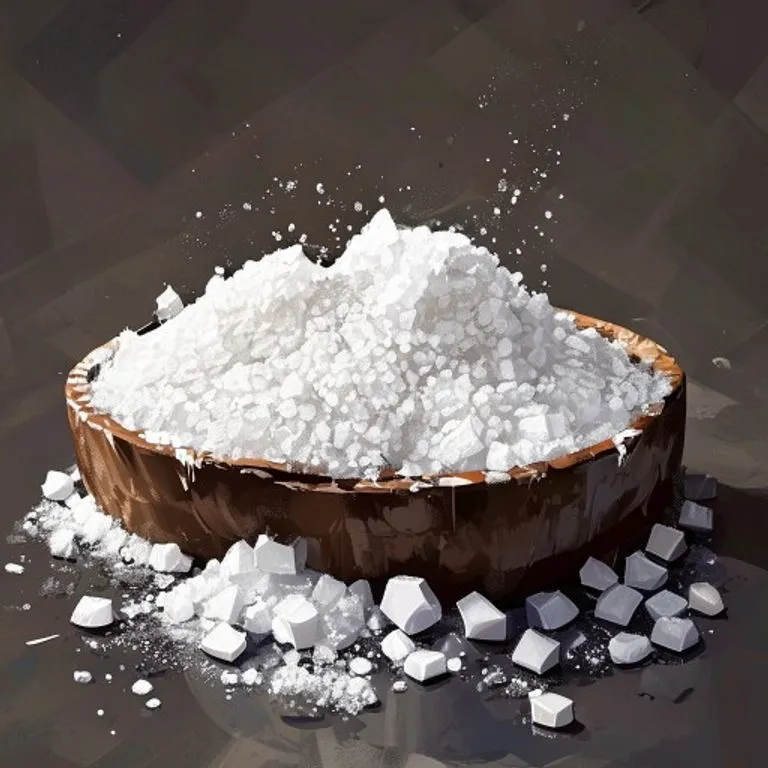
Sodium hydroxide (NaOH), also known as lye and caustic soda, is an inorganic compound. It is a highly caustic base and alkali that decomposes proteins at ordinary ambient temperatures and may cause severe chemical burns.
Description of what it is like
A white, crystalline solid that absorbs moisture from the air (deliquescent). It feels slippery to the touch (because it turns the oils on your skin into soap).
Origin and where to find it
- Not natural: Must be manufactured.
- Historical Source: Produced from soda ash and lime.
Minimum processing required
- Causticization: Mix a solution of Soda (sodium carbonate) with Lime (slaked lime, calcium hydroxide).
- Reaction: Na2CO3 + Ca(OH)2 -> 2NaOH + CaCO3.
- Separation: The calcium carbonate (chalk) precipitates as a solid, leaving a solution of caustic soda.
- Concentration: Boil the solution to evaporate water and obtain solid caustic soda.
Tools needed to work on it
- Iron or Silver pots: It eats through glass and ceramic over time.
- Filters: To remove the precipitated chalk.
- Protective Gear: Essential to prevent skin and eye burns.
Common forms of use
- Lye solution: For soap making.
- Drain cleaner: Dissolves organic clogs.
- Industrial reagent: Used in countless chemical processes.
Possible substitutes
- Potash: Potassium hydroxide (KOH) can be made similarly and used for soft soap.
Limitations and common failures
- Storage: Must be kept in airtight, non-reactive containers (like certain plastics or iron) to prevent it from turning back into soda ash by absorbing CO2 from the air.
Risks and safety
- Chemical Burns: Extremely dangerous to skin and eyes. Always wear protection.
- Exothermic Reaction: Releases significant heat when dissolved in water.
Related materials
Properties
- Strongly alkaline
- Highly corrosive
- White solid
- Very soluble in water
Used for
- Soap making
- Paper making
- Refining bauxite (aluminum ore)
- Cleaning agent
Manufacturing / Process
Produced by reacting soda ash (sodium carbonate) with slaked lime (calcium hydroxide) in a process called causticization, or by electrolysis of brine (chlor-alkali process).