SyntheticGenerated with AI2 min read
Calcium Carbide
CaC2
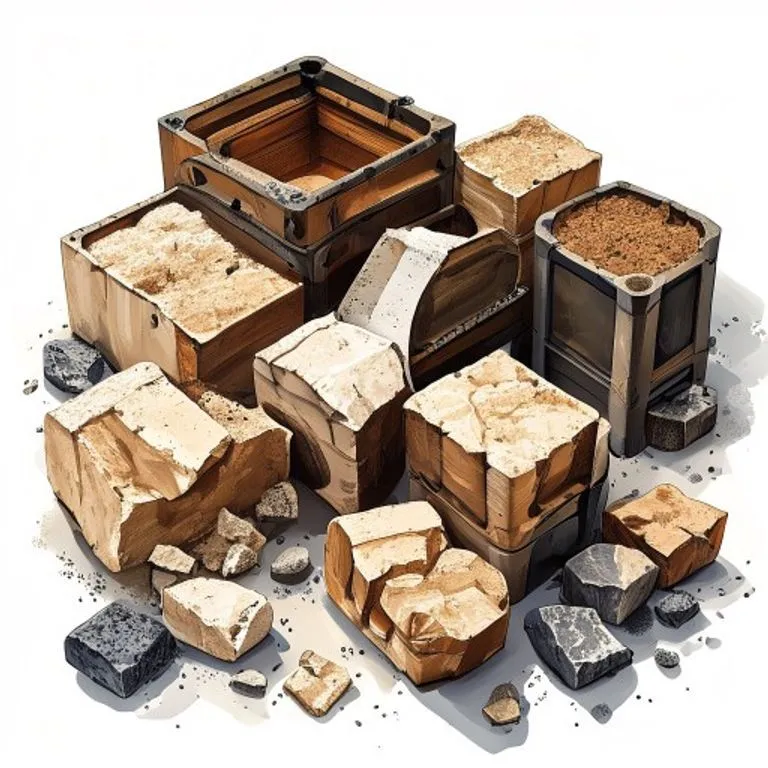
Calcium carbide is an industrial chemical compound used primarily to produce acetylene gas. It is a rock-like solid substance that, when it comes into contact with water, bubbles vigorously, releasing flammable gas.
Description of what it is like
It appears as gray to brown or black stones or pebbles. When dry it is stable, but moisture in the air can cause it to give off an unpleasant odor (garlic/phosphine) and degrade.
Origin and where to find it
- Synthetic: Does not exist in nature due to its reactivity with water.
- Manufacturing: Requires extremely high temperatures (~2200 °C), achievable primarily with electricity.
Minimum processing required
- Raw Materials: Mix Quicklime and Coke/Charcoal in a 60/40 ratio.
- Smelting: Heat the mixture in an Electric Arc Furnace (using large carbon electrodes and high current). The reaction is: $CaO + 3C \rightarrow CaC_2 + CO$.
- Cooling: The molten carbide is tapped and allowed to cool until solidified.
- Crushing: It is broken into pieces of the desired size for generators.
Tools needed to work on it
- Arc Furnace: Essential to reach the reaction temperature.
- Graphite Crucible: To contain the molten mixture.
- Crusher: To break the resulting solid block.
- Airtight Containers: To store the product away from moisture.
Common forms of use
- Carbide Stones: Small pieces used in miner’s lamps or welding generators.
- Powder: Used in metallurgy to clean iron and steel (remove sulfur).
Possible substitutes
- No direct substitute for generating acetylene: There is no other simple stone that generates such hot welding gas with just water.
- For lighting: Oil, candles, batteries.
- For welding: Use Propane (if available) or Hydrogen (generated by electrolysis).
Limitations and common failures
- Moisture: If stored poorly, it will turn into useless lime powder and release dangerous gas.
- Impurities: Poor quality carbide can generate a lot of phosphine (PH3), which is toxic and can ignite spontaneously.
Risks and safety
- Explosion: The acetylene gas generated is explosive. Never let carbide get wet in a closed container without a gas outlet.
- Chemical Burns: The residue (calcium hydroxide) is alkaline and corrosive to skin and eyes.
- Fire: Reacts with water producing heat; large amounts can heat the water to boiling or ignite the gas.
Related Materials
Properties
- grayish solid
- hard
- reacts violently with water
- garlic-like odor (due to impurities)
Used for
- acetylene generation
- carbide lamps
- steel desulfurization
- fruit ripening
Manufacturing / Process
Heating quicklime and coke in an electric arc furnace.