SyntheticGenerated with AI2 min read
Acetylene
C2H2
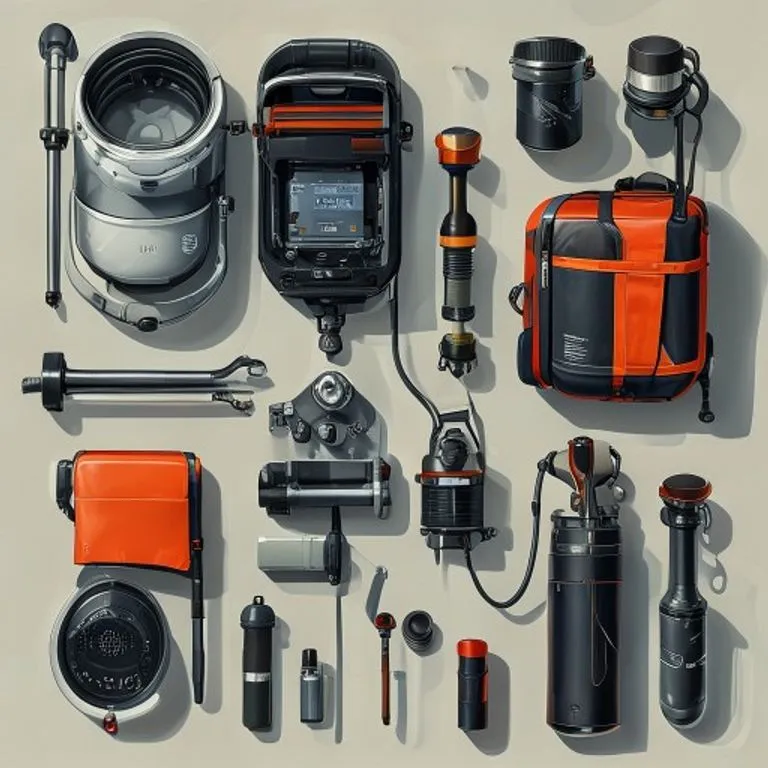
Acetylene (C₂H₂) is a hydrocarbon gas that, when burned with pure oxygen, produces an extremely high-temperature flame (over 3,000°C), making it ideal for welding and cutting steel. Historically, it was also very important for portable lighting (miner’s lamps).
Description of what it is like
It is a colorless gas. In its pure state it is odorless, but commercial grade has a strong and distinct garlic-like odor due to impurities. It is highly flammable and can be explosive if not handled correctly.
Origin and where to find it
- Manufactured: Generated by the reaction of calcium carbide with water.
- Stored: In industrial cylinders, dissolved in acetone within a porous mass to keep it stable.
Minimum processing required
- Obtaining Carbide: Calcium Carbide is needed.
- Generation: In a gas generator (such as a carbide lamp or a gasogene), water drips onto the calcium carbide.
- Reaction: $CaC_2 + 2H_2O \rightarrow C_2H_2 + Ca(OH)_2$ (Acetylene + Slaked Lime).
Tools needed to work on it
- Gas Generator: Airtight container with water drip control.
- Hoses and Valves: To direct the gas to the torch.
Common forms of use
- Oxy-acetylene Welding: Mixed with oxygen for welding.
- Lighting: In carbide lamps for caving or old mining.
Possible substitutes
- Propane/Butane: Safer and easier to store fuel gases, but with lower flame temperature (good for brazing, bad for fusion welding of steel).
- Hydrogen: Used in oxy-hydrogen welding, clean flame but difficult to see.
Limitations and common failures
- Instability: Acetylene can decompose explosively if compressed to more than 15 PSI (approx. 1 bar) in a free state.
- Reaction with Metals: Forms explosive acetylides if it comes into contact with pure copper, silver, or mercury. Alloys like Brass should be used.
Risks and safety
- Explosion: Extremely dangerous if there are leaks in closed spaces.
- Asphyxiation: Displaces oxygen in confined spaces.
Related Materials
Properties
- flammable
- pressure-unstable
- colorless gas
Used for
- gas welding
- metal cutting
- lighting (carbide lamps)
Manufacturing / Process
Chemical reaction between calcium carbide and water.