Generated with AISynthetic3 min read
Activated Charcoal
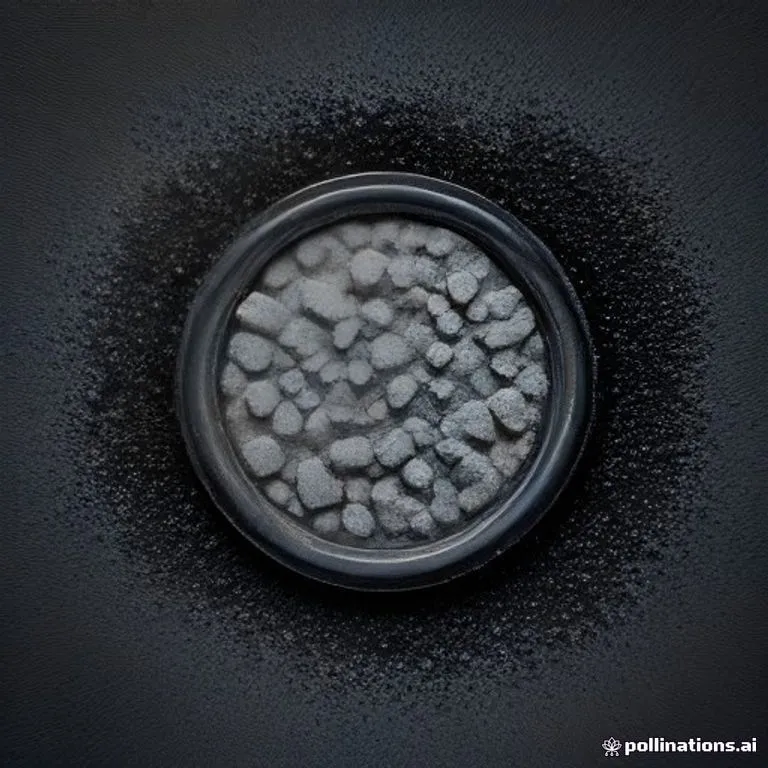
Activated charcoal is a processed form of carbon possessing an exceptionally high surface area (typically 500 to 1,500 m²/g) due to a vast network of sub-microscopic pores. It is the premier material for adsorption of organic compounds, toxins, and impurities.
Description of what it is like
Activated charcoal appears as a fine, dull black powder or porous black granules. It feels extremely lightweight and dry to the touch. Unlike standard charcoal, it has undergone secondary treatment that strips tar residue and creates an immense internal surface area capable of trapping molecules through van der Waals forces.
Origin and where to find it
- Environments: Manufactured wherever hardwood, coconut shells, or peat are processed into charcoal.
- Natural Availability: Does not occur naturally in large quantities, though trace amounts form in extreme wildfire events.
- Processed Material: Requires intentional high-temperature steam or chemical activation of raw Charcoal.
Minimum processing required
- Pyrolysis: Heat hardwood, coconut shells, or nut husks in a low-oxygen kiln to create high-carbon Charcoal.
- Activation: Expose the crushed charcoal to high-temperature superheated steam (800–1000°C) or carbon dioxide in an oxygen-free chamber, or soak it in a dehydrating chemical like calcium chloride or zinc chloride before reheating.
- Washing: Wash thoroughly with clean water to remove ash and activation chemical residues.
- Drying and Crushing: Dry completely and pulverize into fine powder or granular mesh.
Tools needed to work on it
- High-Temperature Retort/Kiln: Capable of reaching 800°C+.
- Steam Generator / Boiler: To introduce superheated steam into the activation chamber.
- Mortar and Pestle / Ball Mill: To grind charcoal into fine powder.
- Mesh Sieves: To separate uniform particle sizes for filters or respirators.
Common forms of use
- Granular (GAC): Used in water treatment columns and industrial air filters.
- Powdered (PAC): Used in emergency medical poisoning protocols and liquid batch purification.
- Pelletized: Used in gas masks and chemical vapor scrubbers.
Possible substitutes
- Standard Charcoal: Readily available but far less effective (has only a fraction of the adsorption capacity).
- Bone Black: Charcoal made from bone calcination; useful for decolorizing liquids.
- Clay / Bentonie: Provides mild adsorption for heavy liquids.
Limitations and common failures
- Saturation: Pore sites fill up over time; once saturated, it can no longer trap contaminants and must be reactivated or replaced.
- Selectivity: Does not adsorb small polar molecules well, such as alcohol, heavy metals, or sodium chloride salt.
- Fines and Dust: Fine powder can escape filter housings unless held by proper fabric layers.
Risks and safety
- Dust Inhalation: Fine carbon dust irritates lungs; wear a mask during grinding.
- Oxygen Depletion: Bulk activated carbon in closed spaces can adsorb oxygen from the air, creating a suffocation hazard.
- Dust Explosions: Suspended carbon dust in air can ignite if exposed to a spark or flame.
Related materials
- Charcoal: The precursor material.
- Wood: Primary raw organic feedstock.
- Water: Primary liquid purified by activated charcoal.
Related knowledge
- Wood Distillation: Pyrolysis process for making charcoal.
- Water Chlorination: Used alongside filtration for full water safety.