Generated with AI3 min read
Wood Distillation
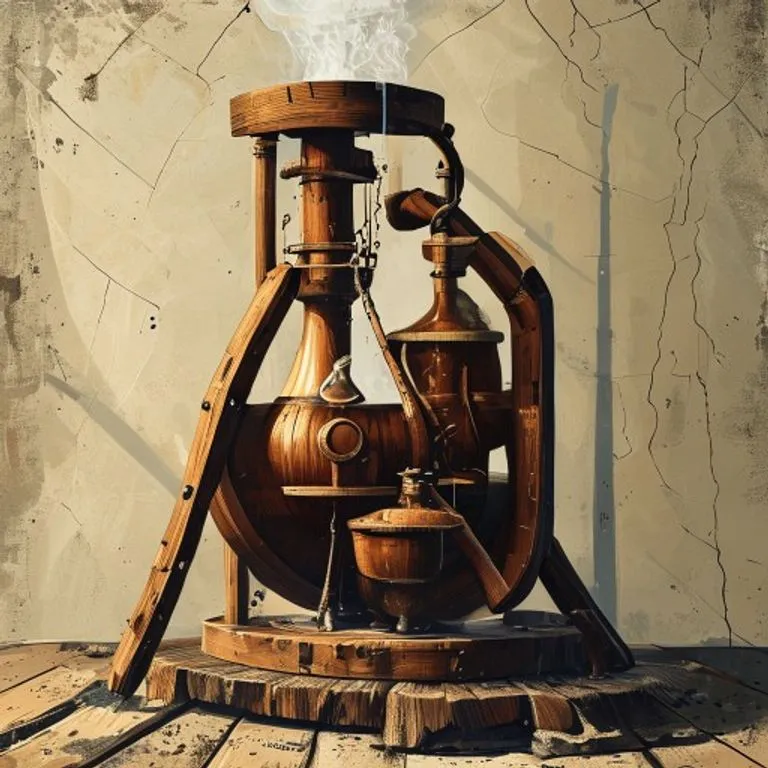
Wood Distillation
Wood distillation (also known as destructive distillation or carbonization) is the process of heating wood in the absence of air to break it down into various useful chemicals and solid charcoal.
Brief description
By heating wood in a closed container (retort) without oxygen, the complex organic molecules (cellulose, hemicellulose, and lignin) decompose. This process yields a variety of solid, liquid, and gaseous products that were the backbone of the chemical industry before the petroleum age.
Use / Function
- Charcoal production: The primary solid residue, used for fuel and metallurgy.
- Chemical feedstock: Produces acetic acid (wood vinegar), methanol (wood alcohol), and acetone.
- Wood Tar: Used for waterproofing ships, ropes, and preserving wood.
- Creosote: Extracted from tar for pharmaceutical and wood preservation uses.
Operating principle
The process follows several stages as temperature increases:
- Drying (up to 200°C): Water vapor is driven off.
- Decomposition (200°C - 280°C): Evolution of carbon dioxide and small amounts of organic acids.
- Exothermic reaction (280°C - 400°C): The wood breaks down rapidly, releasing significant heat and large volumes of combustible gases and vapors (tar and pyroligneous acid).
- Refining (above 400°C): The remaining material is converted into high-carbon charcoal.
How to implement
Simple Retort Method
- Container: Use a sealed metal drum or clay vessel with a single exit pipe.
- Loading: Pack the container with seasoned hardwood.
- Sealing: Ensure the lid is airtight (using clay or mechanical seals) to prevent air entry.
- Heating: Place the retort over a steady fire.
- Collection: The exit pipe should lead to a condenser (a long pipe cooled by air or water) where liquids (tar and wood vinegar) settle into a collection barrel.
- Gas Flare: The remaining non-condensable gases (wood gas) can be piped back to the fire to help heat the retort.
Materials needed
- Wood: Dry hardwoods (like oak or beech) yield the best results for chemicals.
- Retort: A heat-resistant, airtight container (steel or thick ceramic).
- Condenser: Metal or glass tubing.
- Collection vessels: Containers for the different liquid fractions.
Variants
- Traditional Charcoal Kiln: Focuses on charcoal; most chemicals are lost as smoke.
- Industrial Retorts: Continuous processes with precision temperature control for high chemical yield.
Limits / Risks
- Explosion risk: If the exit pipe becomes blocked, pressure will build up rapidly.
- Toxicity: Wood vinegar and tar contain many compounds that are irritants or toxic if ingested or inhaled in high concentrations.
- Fire hazard: The gases produced are highly flammable.