Generated with AI2 min read
Screw
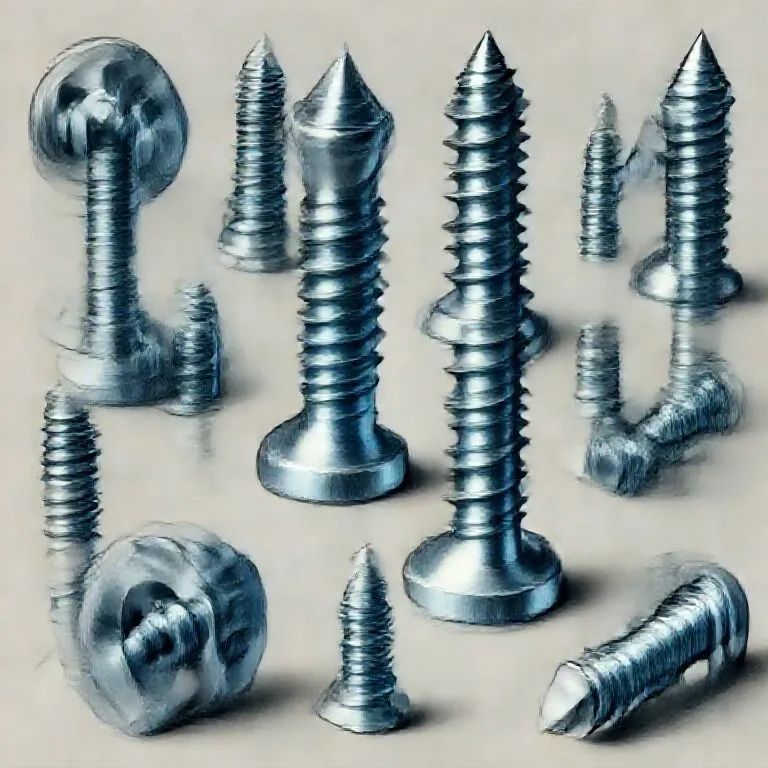
Brief description
A screw is a simple machine consisting of an inclined plane wrapped around a cylinder or cone. It is primarily used to hold objects together or to lift materials.
Use / Function
- Fastening: Joining two or more objects together securely (e.g., wood screws, bolts).
- Motion Conversion: Converting rotational motion into linear motion (e.g., lead screws in machinery).
- Lifting: Raising water or granular materials (e.g., Archimedes’ screw).
- Pressing: Applying great force for squeezing or crushing (e.g., wine press, printing press).
- Scale: From tiny watch components to massive industrial presses.
Operating Principle
The screw works by converting torque (rotational force) into linear force. The distance between the threads is called the “pitch.”
- Mechanical Advantage: A small rotational force applied over a long distance (the circumference of the turn) creates a large axial force over a short distance (the pitch).
- Self-locking: In many screw designs, friction prevents the screw from turning back under load, keeping it secure.
How to create it
- Preparation: Select a cylindrical rod of wood or metal.
- Marking: Draw a diagonal line around the cylinder to define the thread path (helix).
- Cutting:
- Wood: Carve out the material between the marked lines to create the thread profile.
- Metal: Use a file or a harder cutting tool (die) to cut the threads.
- Matching: Create a corresponding internal thread (nut) by tapping a hole or carving the inside of a hollow cylinder.
Materials needed
- Rod: Hardwood (oak, hickory) or metal (bronze, iron, steel).
- Cutting Tools: Chisels, files, or harder metal cutters.
- Lubricant: Tallow or oil to ease the cutting and movement.
Variants and improvements
- Archimedes’ Screw: A large screw inside a pipe used for lifting water.
- Wood Screw: Tapered point for penetrating wood.
- Machine Screw/Bolt: Uniform cylinder for use with a nut.
- Ball Screw: Uses ball bearings for low friction (modern high-precision).
Limits and risks
- Stripping: Applying too much torque can shear off the threads, rendering the screw useless.
- Friction: A significant amount of input energy is lost to friction.
- Corrosion: Metal screws can rust and seize, making them impossible to remove.