Generated with AI2 min read
Scarecrow
Made of
Brief description
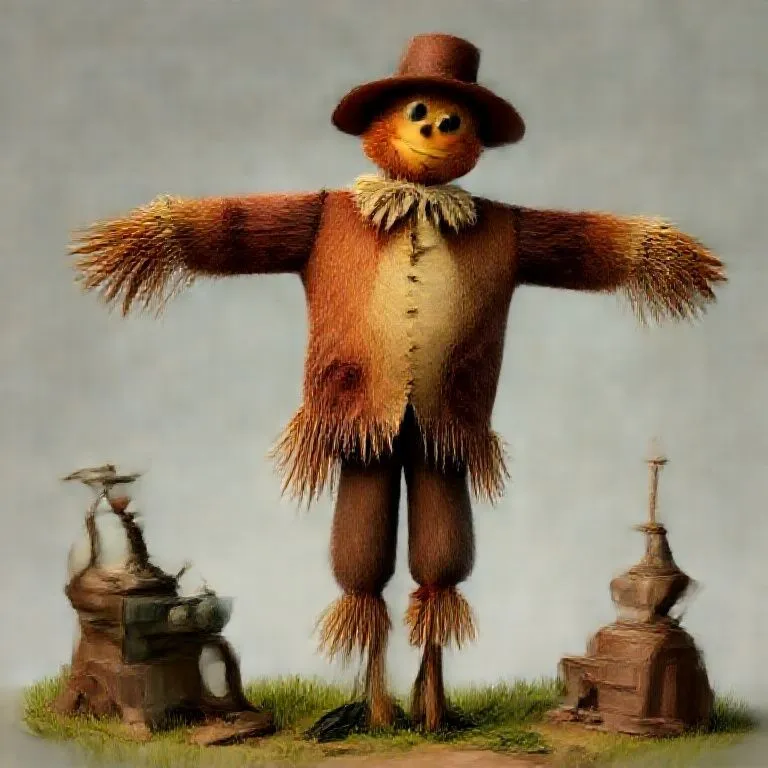
A scarecrow is a field decoy constructed to frighten away birds and small animals that eat seeds or damage crops. Its human shape and movement in the wind make the area appear unsafe.
Use / Function
- Crop protection: Reduces damage by birds during sowing and ripening.
- Plot coverage: Creates a visible point of deterrence in open rows.
- Behavior modification: Induces avoidance of a specific area over time.
- Scale: Orchards, small plots, and medium-sized fields.
Operating principle
- Threatening Silhouette: The human form triggers avoidance in many birds.
- Novelty Effect: New textures and shapes increase caution.
- Movement Cues: The wind provides movement and reinforces the perceived risk.
- Unpredictability: Changing positions or accessories prevents habituation.
How to create it
- Build the Frame: Tie two straight Wood poles in the shape of a cross.
- Add Volume: Stuff with Straw or dry grasses to provide body.
- Dress It: Cover with Fabric, sacks, or old clothing.
- Form the Head: Fill a fabric sack or a bundle of straw and fix it to the top.
- Anchor the Post: Bury and secure with Plant fibers or rope to withstand the wind.
Materials needed
- Essential: Wood, Straw, Fabric, Plant fibers.
- Tools: Knife, awl, hammer, or a stone to drive the post.
- Substitutes: Reeds instead of straw, bark or mats instead of fabric, vines as rope.
Variants and improvements
- Mobile Arms: Adding loose joints or weighted sleeves to move with the wind.
- Sound Generators: Shells, dry seeds, or slats that clatter together.
- Multiple Decoys: Several small ones for flocking birds.
- Rotation: Moving and changing the outfit every week to maintain effectiveness.
Limits and risks
- Habituation: Birds get used to it if the decoy is static.
- Weather Damage: Wind and rain degrade the structure.
- Limited Coverage: A single scarecrow protects only a small radius.
- Fire Risk: Dry straw and fabric burn easily.