Generated with AI4 min read
Reverberatory Furnace
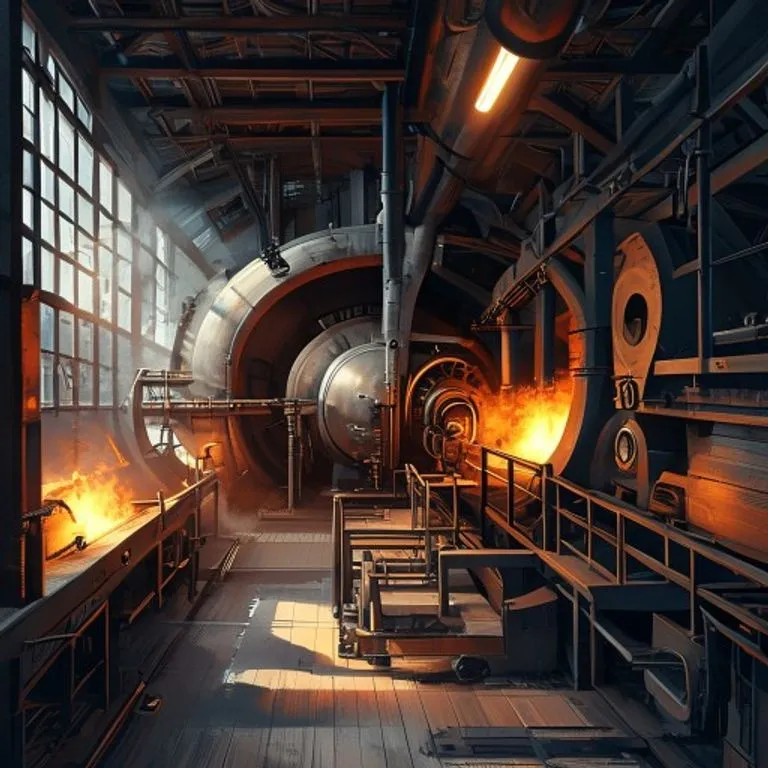
Brief description
A reverberatory furnace is a metallurgical or process furnace that isolates the material being processed from direct contact with the fuel, but not from the hot combustion gases. This design allows high temperatures to be reached while preventing sulfur, ash, and other solid impurities from the fuel (such as coal) from contaminating the molten metal or chemical batch.
Use / Function
- Smelting and Refining: Primarily used for smelting and refining copper, tin, nickel, and lead.
- Puddling Process: Essential for converting pig iron into malleable wrought iron by burning off carbon without direct coal contact.
- Chemical Processing: Historically used in early chemical processes, such as the Leblanc process for producing soda ash.
- Scale: Industrial/Metallurgical.
Operating principle
The reverberatory furnace works by radiating heat downwards from its roof:
- Separate Combustion: Fuel is burned in a separate combustion chamber (firebox) located at one end of the furnace.
- Draft and Flow: A tall chimney at the opposite end creates a strong natural draft, pulling the extremely hot exhaust gases and flames over a low partition wall (bridge) into the main hearth chamber.
- Reverberation (Radiation): The curved, low-slung ceiling of the hearth, built of heat-resistant refractory materials, deflects (“reverberates”) the radiant heat of the flames downwards onto the raw materials sitting on the shallow hearth.
- Smelting: The materials are melted or reacted solely by radiant heat and direct contact with the hot gases, while keeping all solid ash, soot, and fuel impurities isolated in the firebox.
How to create it
1. Constructing the Foundation and Casing
- Clear a level site and build a heavy foundation using durable stone or standard brick.
- Set up iron rods or steel tension bands around the perimeter to act as tie-rods, reinforcing the brick structure against thermal expansion forces.
2. Building the Firebox and Hearth
- Build a dedicated combustion chamber (the firebox) at one end with a grate to support the fuel (wood or coal) and allow ash to fall below.
- Adjacent to the firebox, construct a shallow, dish-shaped basin (the hearth) to hold the ore or metal being melted.
- Separate the firebox and the hearth with a low wall made of refractory firebrick, known as the bridge wall, to prevent solid fuel or ash from spilling onto the hearth.
3. Arching the Ceiling (The Reverberator)
- Build a low, curved arch ceiling spanning from the firebox to the far end.
- Use high-quality refractory firebricks bonded with fireclay. The ceiling must curve downward toward the flue to concentrate and push the hot gases and radiant heat down onto the hearth.
4. Adding the Flue and Chimney
- At the opposite end of the hearth, construct a narrow passage (flue) leading to a tall chimney.
- The chimney must be tall enough to generate sufficient draft to continuously pull the air, fire, and heat across the hearth.
5. Installing Access Doors
- Create side access doors (charge and rabbling doors) lined with refractory clay, allowing operators to load raw materials, skim off slag, and stir (“rabble”) the molten metal.
Materials needed
- Refractory Bricks: Essential for the lining and curved ceiling to withstand temperatures exceeding 1200°C. Sourced from Brick.
- Refractory Clay: To bind the firebricks and coat internal walls. Sourced from Clay.
- Iron Tie-Rods: To bind the external brickwork together and prevent collapse under high thermal stress. Sourced from Iron.
- Building Stone / Standard Brick: For the thick outer walls and chimney base. Sourced from Stone or standard Brick.
- Fuel: Sourced from wood or Coal.
Variants and improvements
- Wood-Fired Reverberatory Furnace: Early versions used dry hardwood, requiring large fireboxes and constant stoking.
- Coal-Fired Reverberatory Furnace: The key breakthrough of the early Industrial Revolution, allowing cheap coal to be used for iron production without sulfur poisoning the metal.
- Modern Siemens-Martin Open Hearth: Uses preheated gaseous fuel and a regenerative heat system to achieve even higher temperatures and melt steel.
Limits and risks
- Refractory Degradation: The extreme heat and corrosive chemical action of metal slag erode the inner firebrick ceiling and lining, requiring frequent rebuilding and maintenance.
- Fuel Consumption: Requires a massive and continuous supply of high-grade coal or dry wood.
- Lethal Gases: Produces dangerous amounts of carbon monoxide, sulfur dioxide, and heavy metal vapors, requiring proper venting and tall chimneys to protect operators.
- Thermal Shock: Rapid cooling can crack the brick arch, leading to a catastrophic collapse of the ceiling.