Generated with AI2 min read
Pantograph
Made of
Brief description
A mechanical linkage of parallelograms designed to duplicate, enlarge, or reduce drawings and mechanical motions with precise scale retention.
Use / Function
- Primary use: Scaling and copying technical drawings, maps, and artwork.
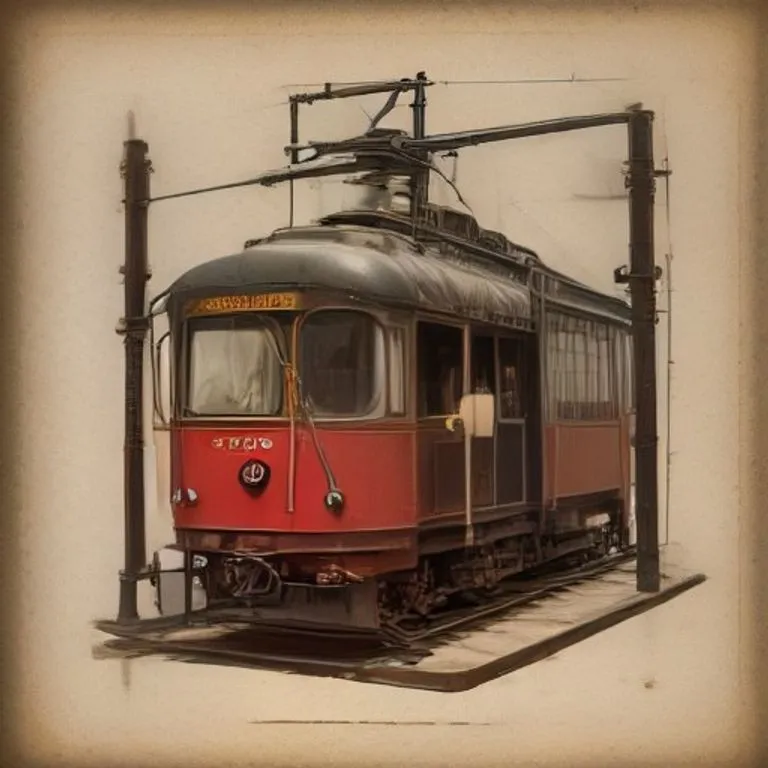
- Secondary uses: Guiding engraving tools, transferring motion in industrial machinery, pantograph power collection for electric trains.
- Scale: Workshop / Drafting desk.
Operating principle
The pantograph operates on geometric similarity and thales’s theorem:
- Parallelogram Linkage: Four rigid bars are connected at four pivot points to form a flexible parallelogram structure.
- Collinear Alignment: The fixed anchor point, the tracing stylus, and the drawing pen must lie along a single straight line.
- Proportional Motion: When the tracing stylus moves across a template, geometric constraints force the drawing pen to replicate the motion scaled by the ratio of arm lengths.
How to create it
Minimum functional version
- Bars: Cut four straight, equal-width strips of Wood or Metal.
- Pivots: Drill precise holes along the bars at calibrated intervals and join them with smooth-pivoting rivets or screws.
- Anchor: Secure one end firmly to a heavy base or drawing board.
- Stylus & Lead: Attach a pointer stylus to the guide point and a Graphite pencil or pen to the output point.
Technical level
Basic to Intermediate. Requires accurate hole placement and low-friction joints.
Materials needed
- Essential materials:
- Tools:
- Ruler, drill, saw, screwdriver.
Variants and improvements
- Adjustable Scale Arms: Multi-hole bars allow quick adjustment of magnification ratios (e.g., 2:1, 4:1).
- 3D Sculpting Pantograph: Adds spatial gimbals to duplicate three-dimensional relief sculptures into wood or stone.
- Engraving Pantograph: Heavy-duty metal pantograph linked to a motorized spindle router for metal sign-making.
Limits and risks
- Joint Play: Any looseness or backlash in the pivot joints causes distortion and inaccuracies in the output drawing.
- Flexure: Weak or flexible arms bend during tracing, degrading precision.
- 2D Limitation: Standard planar pantographs are limited to two-dimensional surfaces.