Generated with AI3 min read
Oil Lamp
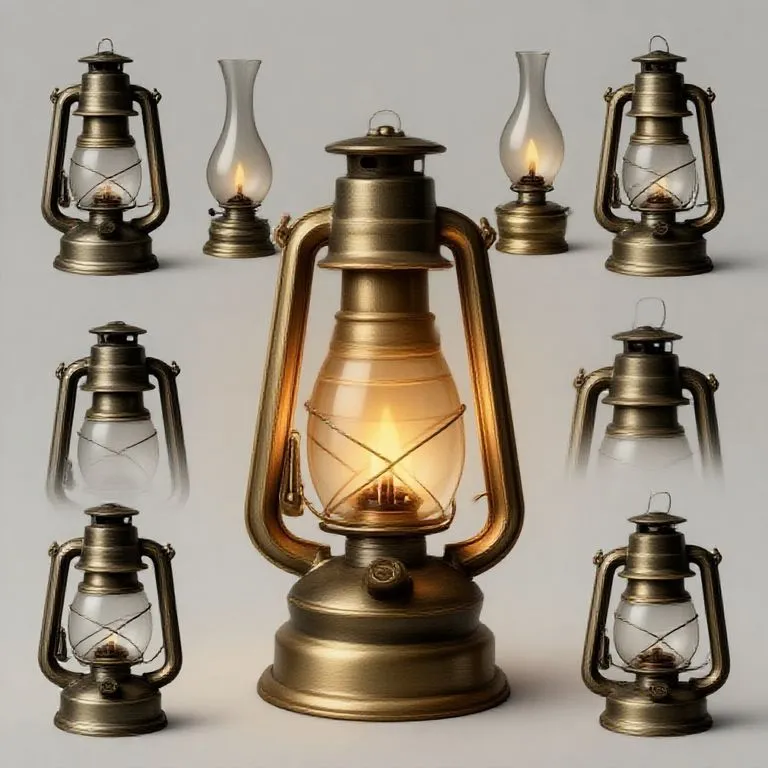
Brief description
The oil lamp is a simple device designed to produce light continuously over a period of time, using an oil or fat-based fuel source and a wick. It is one of humanity’s oldest forms of artificial lighting.
Use / Function
Its purpose is to provide controlled artificial lighting.
- Primary use: Indoor lighting (homes, temples) and outdoor lighting at night.
- Secondary uses: Ceremonial or religious purposes; minor heat source.
- Scale: Primarily domestic and local.
Operating principle
It is based on the principle of capillarity and combustion:
- Capillarity: The wick (a porous or fibrous material) absorbs the liquid fuel and transports it upwards against gravity.
- Vaporization: The heat of the flame vaporizes the fuel at the tip of the wick.
- Combustion: The fuel vapor mixes with oxygen in the air and burns, producing light and heat, which in turn maintains the cycle by vaporizing more fuel.
The wick acts as a regulator, limiting the amount of fuel reaching the flame to prevent all the oil from burning at once.
How to create it
Minimum functional version
- Container: Find or model a small bowl or deep dish made of non-flammable material (clay, stone, seashell, metal).
- Fuel: Partially fill the container with vegetable oil or melted animal fat.
- Wick: Place a braided plant fiber or piece of cotton cloth in the oil, leaving one end sticking out over the edge or floating (using a small floating support of cork or light wood).
- Ignition: Apply fire to the end of the oil-soaked wick.
Technical level
- Basic: Requires only natural materials and simple modeling.
Materials needed
- Essential:
- Non-flammable container: Clay (pottery), carved Stone, shells, metal.
- Fuel: Vegetable Oil (olive, sesame, nut) or Animal Fat (tallow, lard).
- Wick: Plant Fibers (flax, papyrus, hemp), Cotton, or strips of old cloth.
Variants and improvements
- Shell or Stone Lamp: The most primitive version (Paleolithic).
- Terracotta Lamp: With a spout or nozzle to hold the wick and a handle (Antiquity).
- Floating Lamp: The wick floats in the center of the oil using a light support.
- Argand Lamp (18th century): Uses a tubular wick and a glass chimney to improve airflow and brightness (much more efficient).
Limits and risks
- Fire Hazard: If tipped over, burning oil spills and is difficult to extinguish (do not use water).
- Smoke and Soot: If the oil is not pure or the wick is too long, it produces black smoke and dirties the environment.
- Dim Light: A single lamp produces little light (approximately 1 candela); several are needed to light a room well.