Generated with AI2 min read
Manual Lathe
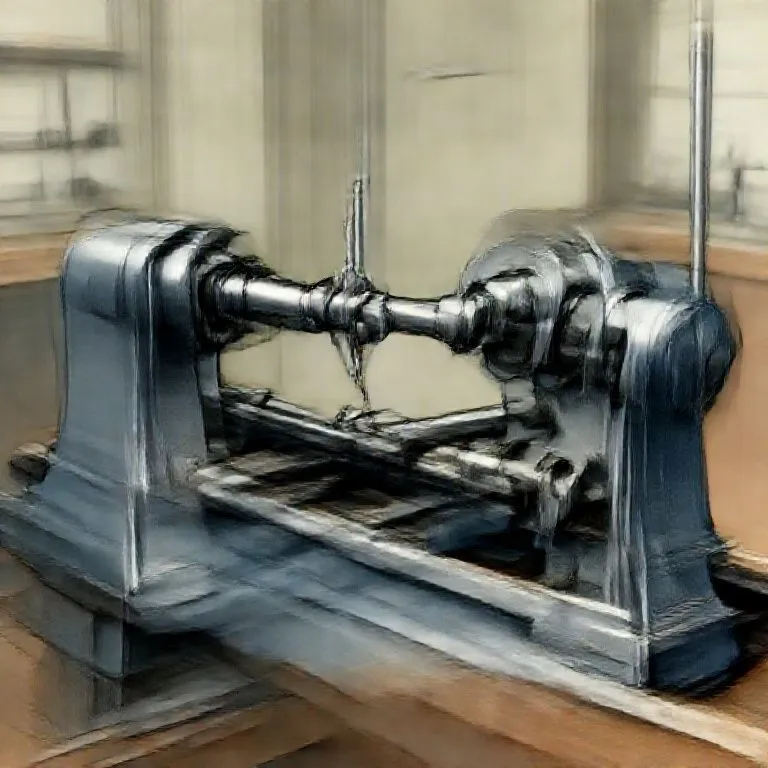
Brief description
A manual lathe is a machine tool that rotates a workpiece about an axis of rotation to perform various operations such as cutting, sanding, knurling, or drilling. It allows for the creation of precise cylindrical or spherical objects.
Use / Function
- Woodturning: Creating legs for furniture, bowls, tool handles, and decorative items.
- Metalworking: Working with soft metals to create precise parts (screws, pins).
- Pottery: The potter’s wheel is a vertical variation of the lathe.
- Precision: Essential for creating other machine parts (screws, pulleys).
Operating principle
The workpiece is held between two points (headstock and tailstock) or on a faceplate. It is rotated rapidly. A sharp stationary tool (chisel) is pressed against the rotating surface, shaving off material to shape the object. The rotation ensures perfect radial symmetry.
How to create it
Spring Pole Lathe (Primitive)
- Frame: Build a sturdy wooden bed with two uprights.
- Points: Insert metal spikes (centers) into the uprights to hold the wood. One must be adjustable.
- Power: Attach a flexible sapling or pole above the lathe. Tie a rope to the tip, wrap it around the workpiece, and tie the other end to a foot treadle.
- Action: Pressing the treadle spins the wood (cutting stroke); the spring pole pulls it back (return stroke).
Bow Lathe (Portable)
- Similar setup but powered by moving a bow back and forth, wrapping the string around the workpiece.
Flywheel Lathe (Continuous)
- Uses a heavy flywheel and a crank or treadle mechanism to maintain continuous rotation and momentum.
Materials needed
- Frame: Sturdy wood (oak, beech).
- Centers: Hardened iron or steel spikes (essential for reducing friction and wear).
- Drive: Rope (leather or fiber).
- Spring: Flexible wood pole or bungee.
- Cutting Tools: Chisels made of hardened steel or iron.
Variants and improvements
- Potter’s Wheel: Vertical axis for clay.
- Treadle Lathe: Uses a flywheel for continuous rotation.
- Screw-cutting Lathe: Advanced version with gears to cut precise threads.
Limits and risks
- Reciprocating Motion: Pole/bow lathes only cut on the downstroke (50% efficiency).
- Speed Limits: Manual power limits the cutting speed, making it hard to turn very hard materials.
- Safety: Loose clothing or hair can be caught in the rotating machinery.
- Vibration: A flimsy frame will cause chatter, ruining the finish.