Generated with AI3 min read
Lightning Rod
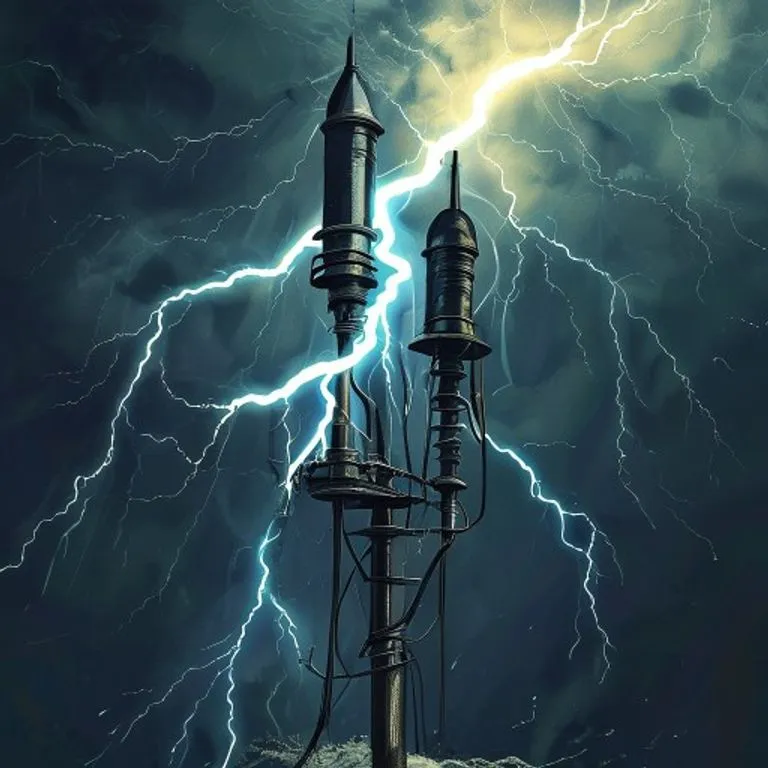
Brief description
A lightning rod is a metal rod mounted on a structure and intended to protect the structure from lightning damage. It provides a low-resistance path to the ground that can be used to conduct the enormous electrical currents when lightning strikes occur.
Use / Function
- Primary use: Protecting buildings and other structures from lightning strikes.
- Secondary uses: Protecting electrical substations and power lines.
- Scale: Individual buildings, industrial facilities, and infrastructure.
Operating principle
The lightning rod works by providing a preferred path for the lightning to follow to the ground.
- Point Effect: The sharp point of the rod concentrates the electric field around it.
- Ionization: This concentrated field can ionize the air nearby, which might slightly encourage the lightning to strike the rod rather than other parts of the building.
- Conduction: When struck, the rod conducts the massive current safely through a heavy wire or cable into a grounding system buried in the earth, where the energy is dissipated.
How to create it
- Rod: A pointed metal rod (usually copper or iron) installed at the highest point of a structure.
- Conductor: A thick metal cable or wire connected to the rod. It must have very low resistance and be able to carry high current without melting.
- Grounding: The conductor is connected to a metal plate or rod buried deep in the moist earth to ensure a good electrical connection.
- Technical level: Intermediate (requires understanding of electrical grounding and safe installation).
Materials needed
- Essential: Copper or Iron rod, thick Wire or cable.
- Tools: Hammer, mounting brackets, digging tools for grounding.
- Possible substitutes: Aluminum or other highly conductive metals for the rod and conductor.
Variants and improvements
- Early versions: Simple iron rods used by Benjamin Franklin.
- Modern versions: Use of specialized alloys, multiple points, and sophisticated surge protection devices integrated into the building’s electrical system.
- Early Streamer Emission (ESE): Advanced rods designed to “reach out” and trigger the lightning strike earlier (controversial in effectiveness).
Limits and risks
- Installation Error: If the path to ground is not low-resistance or is poorly connected, the lightning may jump to other parts of the structure (side-flashing), causing fire or damage.
- Maintenance: Corrosion of the rod or grounding system can degrade its effectiveness over time.
- False Security: A lightning rod does not “attract” all lightning in the area; it only protects the immediate structure it is mounted on.
Related Inventions
- Building
- Wire
- Simple Electric Generator (related to electricity)