Generated with AI2 min read
Galvanometer
Brief description
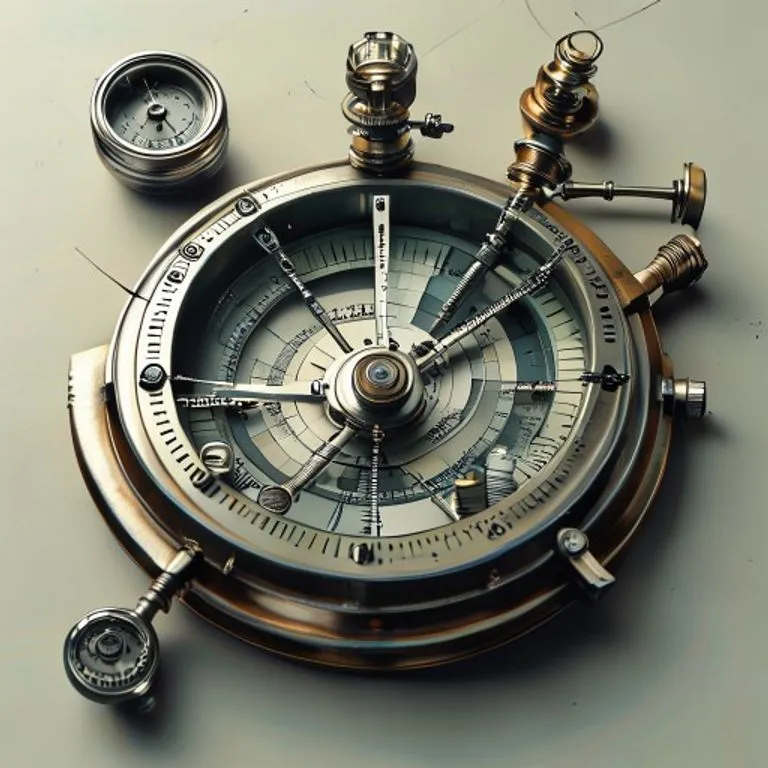
A galvanometer is an instrument for detecting and measuring small electric currents. It is the fundamental diagnostic tool for understanding and utilizing Electricity.
Use / Function
- Current Detection: Verifying if a circuit is active.
- Polarity Testing: Determining the direction of current flow.
- Component Building: Base for making voltmeters and ammeters.
- Research: Essential for experiments with electromagnetism.
Operating principle
The galvanometer works on the principle of electromagnetism:
- An electric current flowing through a coil of wire produces a magnetic field.
- This magnetic field exerts a force on a nearby magnetic needle.
- The deflection of the needle is proportional to the strength and direction of the current.
How to create it
Minimum functional version
- Base: A non-conductive base made of Wood or plastic.
- Magnetic Needle: A magnetized Iron needle (compass needle) balanced on a pivot.
- Coil: Wrap many turns of insulated Copper wire around the needle or a frame surrounding the needle.
- Alignment: Align the coil so that when no current flows, the needle points parallel to the loops of the coil.
Materials needed
- Essential materials:
- Tools:
Variants and improvements
- Astatic Galvanometer: Uses two needles with opposite polarities to cancel out the Earth’s magnetic field, greatly increasing sensitivity.
- Moving Coil (D’Arsonval): The coil moves instead of the magnet; more robust and accurate for modern use.
- Mirror Galvanometer: Uses a tiny mirror and a beam of light to amplify small deflections.
Limits and risks
- Magnetic Interference: Nearby magnets or iron objects can distort readings.
- Overload: Excessively high current can melt the fine wire of the coil or demagnetize the needle.
- Earth’s Magnetic Field: Simple versions must be oriented correctly relative to North to function as intended.