Generated with AI2 min read
Flint and Pyrite Ignition
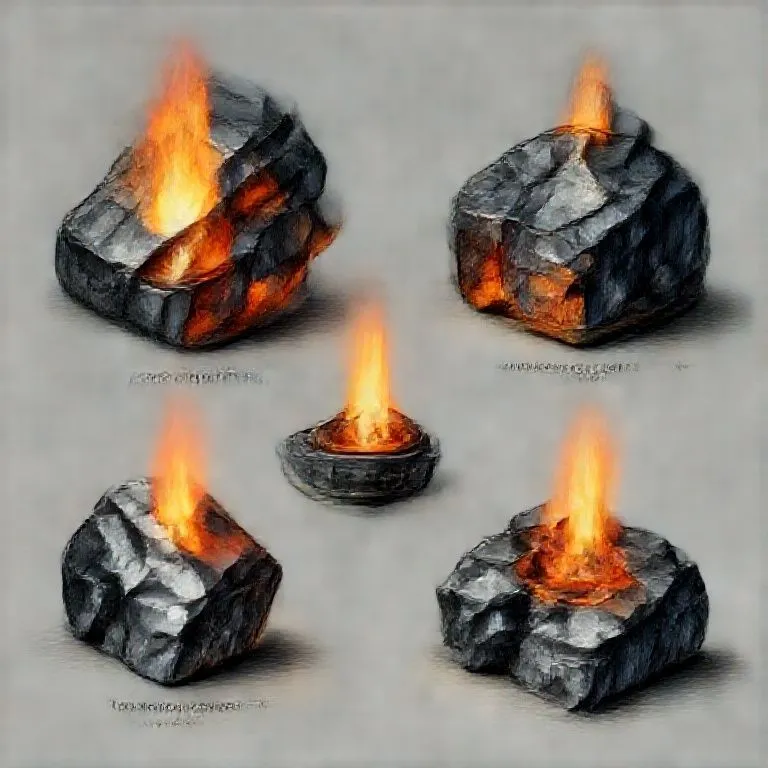
Made of
Brief description
Flint and pyrite ignition is a percussion method that creates sparks by striking flint against pyrite, lighting prepared tinder.
Use / Function
- Primary use: Produce sparks to ignite tinder.
- Secondary uses: Portable fire starting without friction drilling.
- Scale: Individual.
Operating principle
Hard impacts scrape tiny metal-rich particles from pyrite. These particles heat rapidly in air and become sparks that can ignite dry, fine tinder.
How to create it
- Prepare tinder: Use very dry, finely shredded fibers or charred plant material.
- Hold pyrite: Grasp the pyrite with a sharp edge exposed.
- Strike with flint: Hit the pyrite sharply to shower sparks onto the tinder.
- Ignite: Once a spark catches, nurture it into an ember and blow into flame.
- Technical level: Basic.
Materials needed
- Essential: Flint, pyrite, dry tinder.
- Tools: A stone or bone striker for handling comfort.
- Substitutes: Flint and steel if steel is available.
Variants and improvements
- Spark catcher: A shallow bark tray to hold tinder.
- Charred fibers: Increase catch reliability.
- Compact kit: Small flint and pyrite pieces for portability.
Limits and risks
- Tinder quality: Requires extremely dry, fine tinder.
- Weather dependence: Wind and humidity reduce success.
- Hand injury: Sharp edges can cut skin.