Generated with AI2 min read
Canning
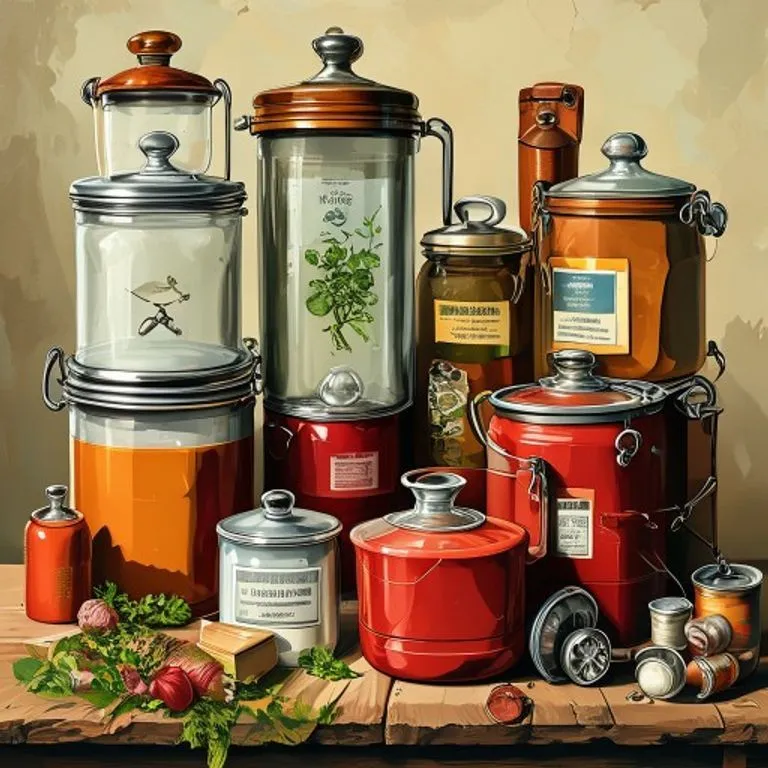
Brief description
Canning is a method of preserving food by heating it in airtight containers. This process kills microorganisms and seals the container to prevent new ones from entering, allowing food to be stored for years without refrigeration.
Use / Function
- Long-term Storage: Preserving fruits, vegetables, meat, and fish for seasons of scarcity.
- Portability: Providing stable food supplies for travelers, soldiers, and explorers.
- Safety: Eliminating pathogens that cause spoilage and foodborne illness.
Operating principle
The process relies on heat sterilization and hermetic sealing:
- Preparation: Food is cleaned and often partially cooked.
- Filling: Food is placed into jars or cans, leaving a small headspace.
- Heating: The sealed (or partially sealed) containers are heated to a specific temperature for a set time. This kills bacteria, yeasts, and molds.
- Sealing: As the container cools, a vacuum is created, pulling the lid down tight and creating a hermetic seal that prevents re-contamination.
How to create it
Minimum functional version (Water Bath Canning)
- Containers: Use Glass jars with tight-fitting lids and rubber seals.
- Processing: Submerge the filled jars in boiling water.
- Time: Boil for 10–90 minutes depending on the food type.
- Cooling: Remove jars and let them cool undisturbed until the lids “pop” or seal.
Technical level: Intermediate. Requires precise temperature and time control.
Materials needed
- Essential: Airtight containers (Glass jars or Tin-plated Steel cans), lids, and Water for boiling.
- Tools: Large pot (canner), jar lifter, and a heat source.
- Substitutes: Wax seals were used historically but are less reliable than modern vacuum lids.
Variants and improvements
- Pressure Canning: Uses a Pressure Cooker to reach temperatures above boiling (121°C/250°F). Required for low-acid foods like meat and most vegetables to kill botulism spores.
- Commercial Canning: High-speed industrial lines using metal cans.
Limits and risks
- Botulism: The most serious risk. Clostridium botulinum spores can survive boiling water and thrive in the anaerobic (no oxygen) environment of a can. Low-acid foods must be pressure canned.
- Seal Failure: If the seal is compromised, food will rot and become dangerous.
- Nutrient Loss: High heat can destroy some vitamins (like Vitamin C).
- Glass Breakage: Jars can crack if subjected to thermal shock (rapid temperature changes).