Generated with AI2 min read
Pliers
Made of
Brief description
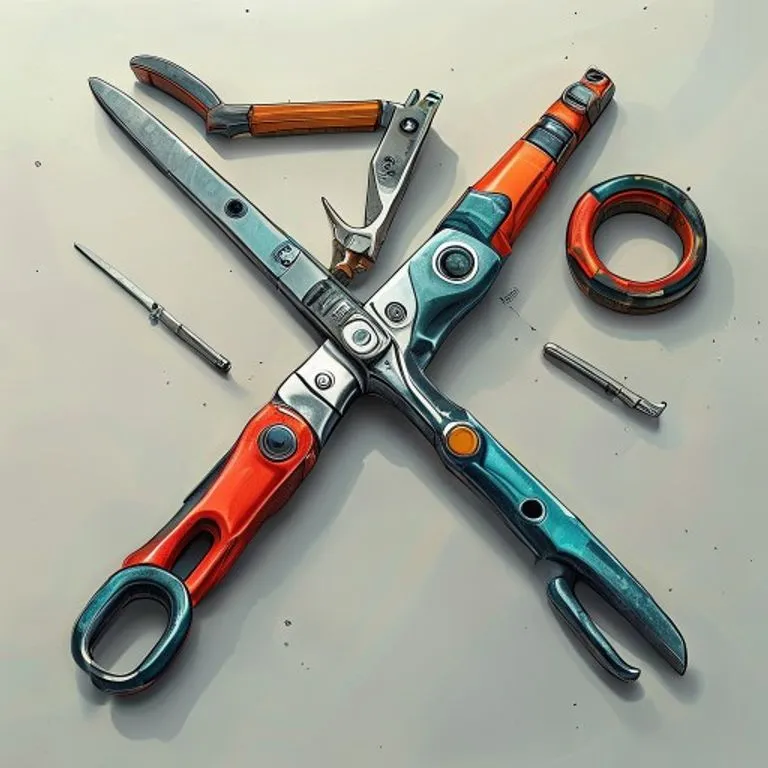
Hand tools used to hold objects firmly, typically developed from tongs used to handle hot metal in Bronze Age Europe. They consist of two levers joined at a fulcrum.
Use / Function
- Primary use: Gripping, bending, and compressing materials.
- Secondary uses: Cutting wire (if equipped with cutters), holding hot objects.
- Scale: Manual, individual use.
Operating principle
Pliers work on the principle of a first-class lever. The fulcrum is positioned between the effort (hand) and the load (jaws).
- Mechanical Advantage: The longer handles relative to the short jaws provide a mechanical advantage, allowing the user to apply a strong gripping force with moderate hand pressure.
How to create it
Minimum functional version
- Forging: Create two identical metal pieces, each with a handle side, a jaw side, and a hole for the pivot.
- Assembly: Align the pivot holes and insert a rivet or bolt.
- Finishing: Ensure the jaws meet flush when closed.
Technical level
- Intermediate: Requires blacksmithing skills to forge the shapes and align the pivot correctly.
Materials needed
- Essential materials:
- Steel: Hardened steel is best for the jaws to prevent deformation; tougher steel for the handles.
- Rivet: A steel pin to act as the fulcrum.
- Tools:
- Forge, Anvil, Hammer: For shaping.
- Drill/Punch: For the pivot hole.
Variants and improvements
- Slip-joint pliers: Allow the pivot to move, adjusting the jaw size range.
- Locking pliers (Mole grips): Lock in place for hands-free operation.
- Needle-nose pliers: Long, thin jaws for reaching into tight spaces.
- Wire cutters: Integrated cutting edges near the pivot.
Limits and risks
- Grip strength: Limited by the user’s hand strength unless locking mechanism is used.
- Surface damage: Serrated jaws can mar soft materials; use smooth jaws or padding for delicate work.
- Insulation: Metal handles conduct electricity/heat; rubber or plastic coatings are needed for electrical work.