NaturalGenerated with AI2 min read
Platinum
Made of
Description of what it is like
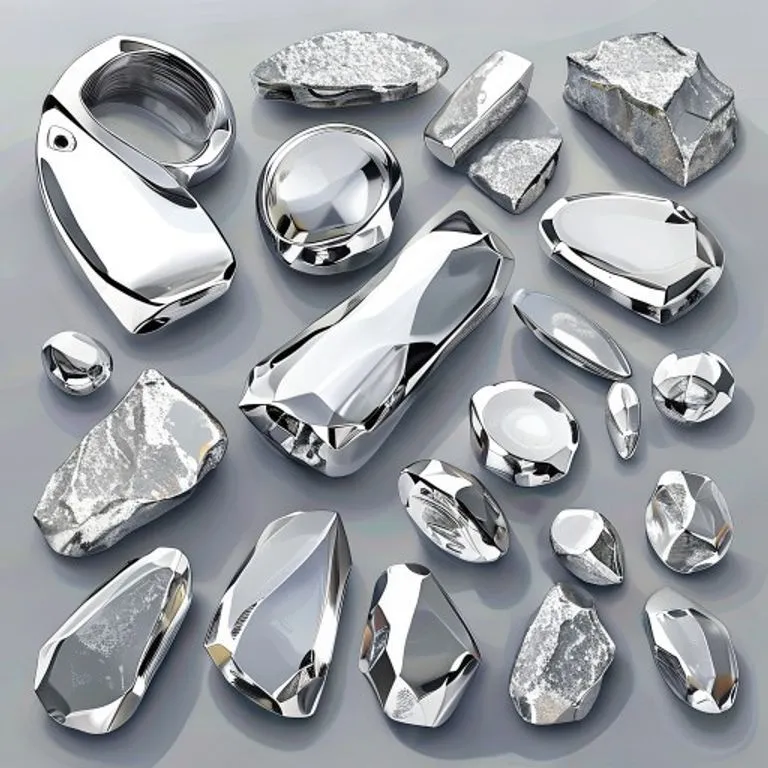
Platinum is a heavy, grey-white metal with a bright luster. It is tough, very resistant to corrosion, and remains stable at high temperatures. It can be worked into sheets and wire but requires intense heat to melt.
Origin and where to find it
- Environments: Layered mafic or ultramafic intrusions, nickel-copper sulfide deposits, and river placers where heavy grains accumulate.
- Signs: Dense metallic grains that resist tarnish; often found with other platinum-group metals.
- Processing: Rarely found as pure metal; typically mixed with sulfide ores or alluvial concentrates.
Minimum processing required
- Gravity concentration: For placer sands, washing to collect heavy grains.
- Smelting: For sulfide ores, producing a matte that concentrates platinum-group metals.
- Chemical separation: Dissolving and precipitating to isolate platinum; low processing leaves brittle, impure metal with weak catalytic performance.
Tools needed to work on it
- High-temperature furnace: Capable of reaching ~1770°C.
- Crucibles: Alumina or zirconia that withstand heat and acids.
- Acid-resistant glassware: For chemical separation.
- Hammers and rollers: For shaping once refined.
Common forms of use
- Alloys: Jewelry and wear-resistant parts.
- Powder or sponge: Catalysts for chemical reactions.
- Wire: Thermocouples and electrical contacts.
- Crucibles and labware: Containers for high-temperature or corrosive work.
Possible substitutes
- Gold: Corrosion resistant but softer and lower melting point.
- Silver: Conductive but tarnishes and softens easily.
- Stainless steel: Durable for tools but lacks catalytic properties.
- Palladium: Similar catalytic behavior but less heat-resistant.
Limitations and common failures
- High melting point: Difficult to cast without advanced furnaces.
- Impurity brittleness: Residual base metals make it crack or flake.
- Catalyst poisoning: Sulfur, lead, and oils reduce catalytic activity.
- Cost and rarity: Limits large-scale use.
Risks and safety
- Hot metal hazards: High-temperature work risks burns and fire.
- Fine dust: Platinum sponge or powder can irritate lungs and skin.
- Strong acids: Refining uses corrosive acids that require ventilation and protective gear.
Related materials
Properties
- Noble metal
- Highly corrosion resistant
- High melting point
- Dense
- Catalytic
Used for
- Catalysts
- Jewelry
- Laboratory equipment
- Electrical contacts
- Thermocouples
- Fuel cells
Manufacturing / Process
Recovered as a byproduct of nickel and copper ores or placer deposits; concentrated, smelted, and chemically refined to separate platinum-group metals.