Generated with AI2 min read
Food Cooking
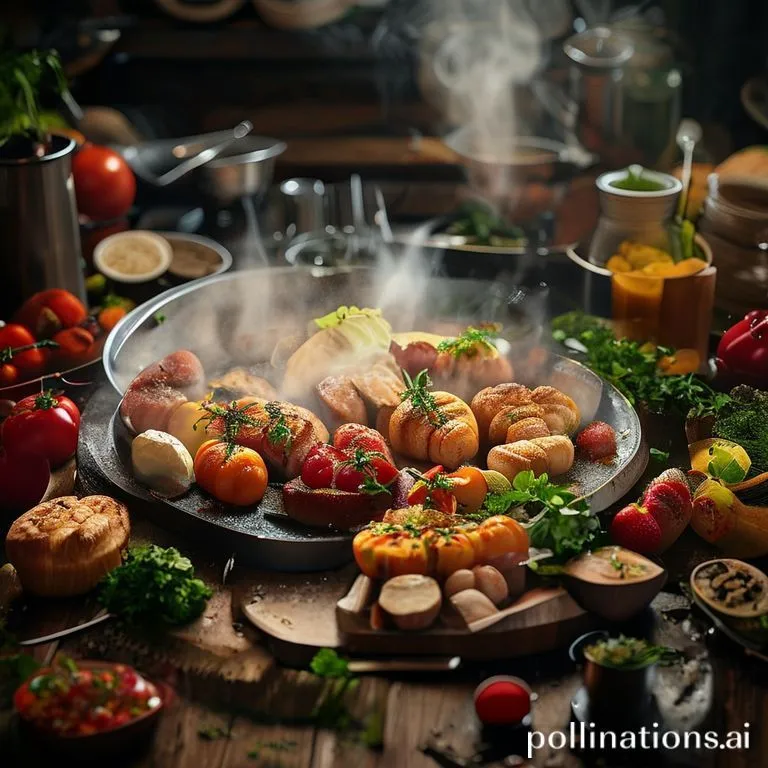
Brief description
Food cooking is the process of applying heat to food to make it safer, more digestible, and more palatable. It is one of the most significant technological leaps in human history, allowing for better nutrient absorption and the neutralization of many toxins and pathogens.
Use / Function
- Sanitization: Kills bacteria and parasites.
- Digestibility: Breaks down complex proteins and starches, making them easier to absorb.
- Preservation: Some cooking methods (like smoking or drying with heat) extend the shelf life of food.
- Flavor enhancement: Triggers chemical reactions (like the Maillard reaction) that improve taste.
Operating principle
Cooking relies on the transfer of thermal energy to food. This can occur through:
- Conduction: Direct contact with a hot surface (e.g., a hot stone).
- Convection: Transfer through a fluid like water (boiling) or air (roasting).
- Radiation: Transfer through electromagnetic waves (e.g., infrared from glowing coals).
Heat causes physical and chemical changes in the food’s structure, such as denaturing proteins and gelatinizing starches.
How to create it
The simplest form of cooking requires:
- Heat source: Usually a controlled fire.
- Support/Container: A way to hold the food near or in the heat without it being destroyed.
- For roasting: A wooden spit or a flat stone.
- For boiling: A heat-resistant container (clay pot or waterproof basket with hot stones).
Materials needed
- Essential: Fuel (wood, charcoal), heat source (fire).
- Tools:
- Roasting: Wooden sticks, flat stones.
- Boiling: Clay pots, water.
- Frying: Animal fats or vegetable oils, flat stones or metal pans.
Variants and improvements
- Roasting: Direct exposure to fire or embers.
- Boiling: Cooking in water, requiring pottery.
- Steaming: Using vapor, often in pits covered with leaves.
- Baking: Using an enclosed heated space (oven).
- Modern versions: Induction, microwave, and pressure cooking.
Limits and risks
- Overcooking: Can destroy vitamins and produce harmful compounds (like acrylamides).
- Fire Hazard: Requires constant supervision of the heat source.
- Fuel Consumption: Requires a steady supply of wood or other combustible materials.
- Toxic Containers: Some materials used for cooking (like certain glazed ceramics or lead) can leach toxins into the food.