Generated with AI2 min read
Threshing Machine
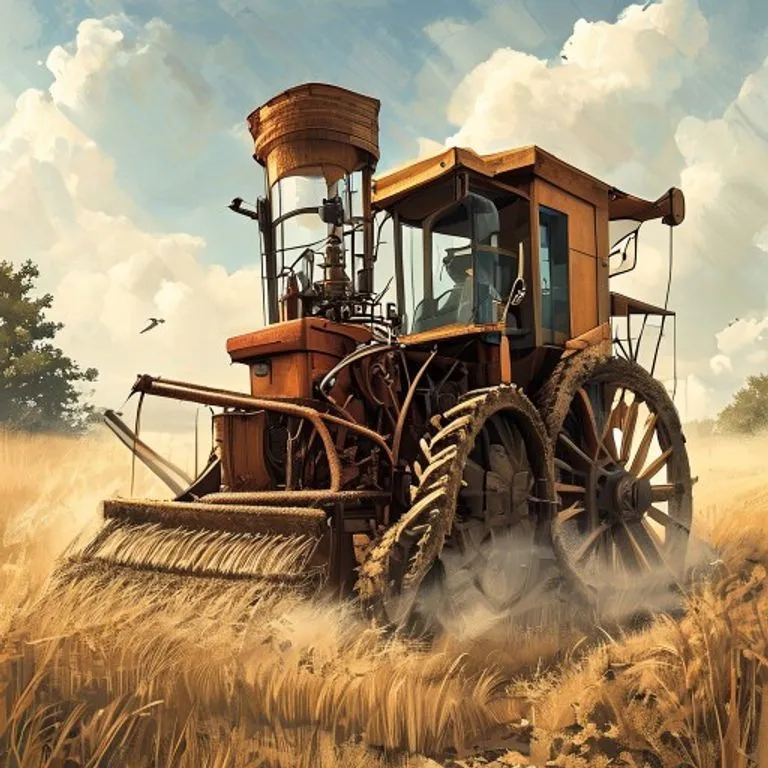
Brief description
A machine used to separate grain from the stalks and husks on which it grows. It replaced the manual process of beating the grain with a flail.
Use / Function
- Primary use: Separating grain (wheat, rye, etc.) from its straw and chaff.
- Secondary uses: Cleaning seeds.
- Scale: Industrial/Agricultural.
Operating principle
The machine works by feeding the crop through a rotating cylinder and a stationary concave.
- Feeding: The cut stalks are fed into the machine.
- Beating: A rotating drum with pegs or rasps beats the grain against a concave surface, loosening the kernels.
- Separation: The grain and chaff fall through a screen, while the straw is moved along and discharged.
- Winnowing: A fan blows air through the falling grain and chaff, blowing away the lighter chaff and leaving the clean grain.
How to create it
- Level: Advanced.
- Mechanism: Requires a rotating drum and a system of sieves and fans.
- Power: Historically powered by hand, horses (using a horse power), or steam engines.
Materials needed
- Essential materials: Wood (for frame), Steel (for the drum and screens), Iron (for bearings and gears).
- Tools: Forge, woodworking tools, metalworking tools.
Variants and improvements
- Meikle’s Threshing Machine: One of the first successful designs (1786).
- Combine Harvester: Integrated the threshing machine with the reaper.
Limits and risks
- Complexity: Many moving parts that can fail.
- Fire Risk: Dust and friction can lead to fires.
- Safety: Extremely dangerous; hands or limbs can be caught in the rotating drum.