Generated with AI2 min read
Screwdriver
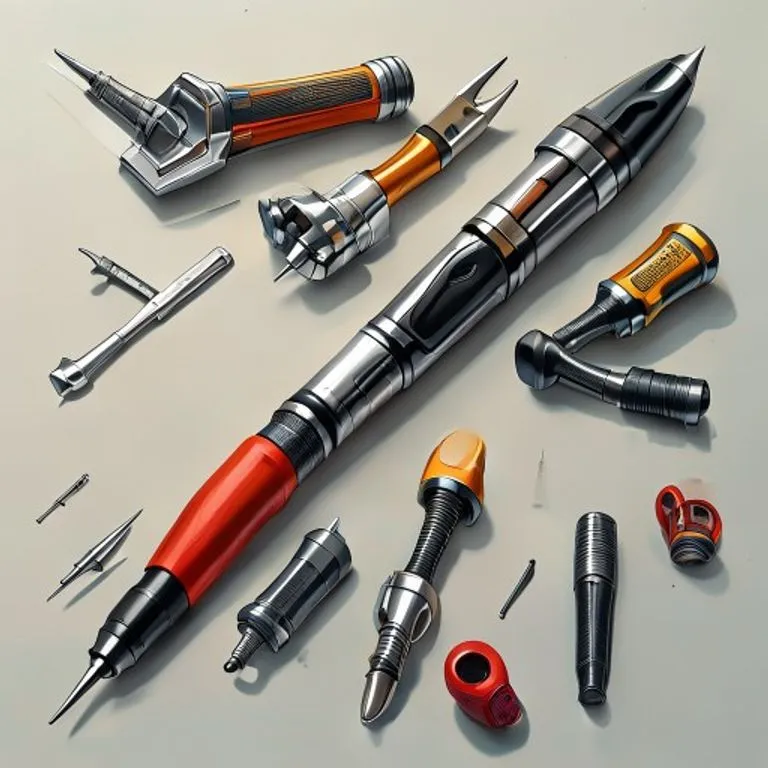
Brief description
A manual or powered tool used for turning screws. A typical screwdriver has a handle and a shaft, ending in a tip the user puts into the screw head before turning the handle.
Use / Function
- Primary use: Installing and removing screws.
- Secondary uses: Prying open lids, scraping (though not recommended).
- Scale: Manual, individual use.
Operating principle
The screwdriver amplifies the torque applied by the user’s hand.
- Torque: The larger diameter of the handle relative to the screw’s shaft provides a mechanical advantage, allowing the user to generate more torque than would be possible by turning the screw shaft directly.
How to create it
Minimum functional version
- Shaft: Forge or grind a steel rod to flatten one end into a wedge shape (for slotted screws).
- Handle: Carve a wooden handle with a central hole.
- Assembly: Heat the non-tip end of the shaft (tang) and drive it into the wooden handle, or use epoxy/glue.
Technical level
- Basic: Requires basic metalworking to shape the tip and woodworking for the handle.
Materials needed
- Essential materials:
- Steel: Hardened steel for the tip is crucial to prevent it from twisting or snapping under torque.
- Wood/Plastic: For the handle, to provide grip and leverage.
- Tools:
- File/Grinder: To shape the tip precisely.
- Hammer: To seat the shaft in the handle.
Variants and improvements
- Phillips/Cross-head: Cruciform tip that self-centers but can cam out.
- Robertson (Square): High torque transfer, less cam-out.
- Torx: Star-shaped pattern for high torque transmission.
- Ratcheting: Allows continuous turning without removing the tip from the screw head.
Limits and risks
- Stripping: Using the wrong size or type of tip can damage the screw head (stripping it).
- Cam-out: The driver slipping out of the screw head under torque.
- Tip breakage: Hardened tips can be brittle; if used as a pry bar, they may snap.