Generated with AI3 min read
Scissors
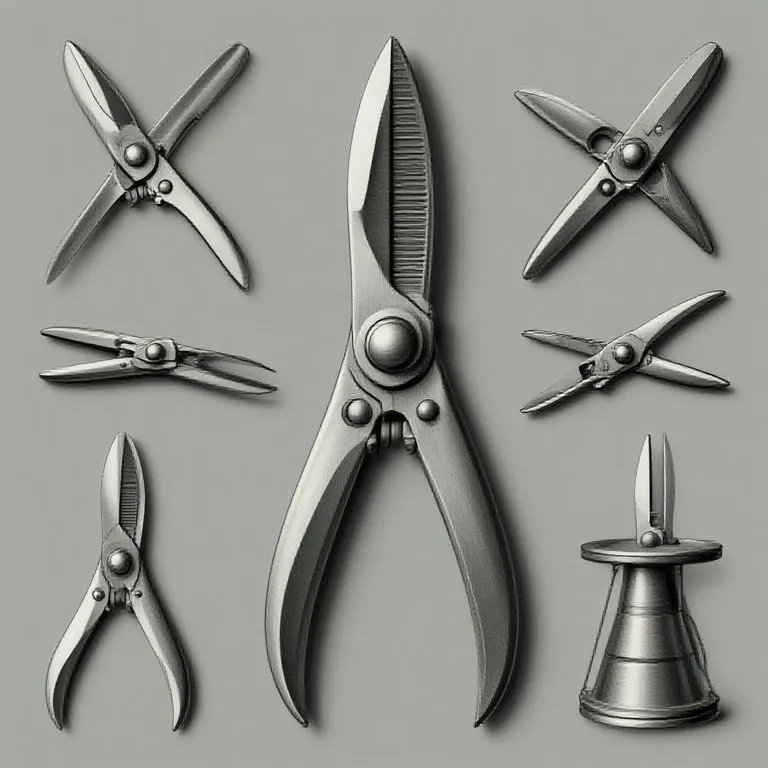
Brief description
Scissors are hand-operated shearing tools consisting of a pair of metal blades connected in such a way that the blades slide against each other. They are essential for cutting thin materials like fabric, paper, hair, and rope with precision.
Use / Function
- Cutting: Precision cutting of fabrics for clothing, bandages, and sails.
- Grooming: Cutting hair and nails (hygiene).
- Medical: Cutting sutures and dressings.
- Agriculture: Shearing wool from sheep (using spring scissors).
Operating principle
Scissors operate by applying shearing force. The two blades are sharpened on the inner side and pivoted so that they slide against each other. The material placed between them is subjected to opposite forces very close together, causing it to fail (cut) along a line rather than being crushed. The lever action allows a small force at the handle to exert a large cutting force at the blades.
How to create it
Spring Scissors (Easier, Ancient style)
- Forming: Take a long, flat bar of metal (bronze or iron).
- Shaping: Flatten the two ends to form blades.
- Bending: Bend the bar in the middle into a ‘U’ or ‘C’ shape so the blades cross each other under tension.
- Sharpening: Sharpen the inner edges of the blades. The spring tension keeps them pressed together.
Pivoted Scissors (Modern style)
- Forging: Forge two separate identical halves, each with a blade and a handle (ring).
- Drilling: Drill a hole in the center of each piece where they will cross.
- Assembly: Place the two halves together and insert a rivet or screw through the hole.
- Setting: Hammer the rivet carefully. It must be tight enough to keep blades touching, but loose enough to allow movement.
- Sharpening: Sharpen the cutting edges.
Materials needed
- Metal: Bronze (early), Iron, or Steel (best for holding an edge).
- Rivet: Small metal rod for the pivot (for pivoted scissors).
- Tools: Hammer, Anvil, File, Drill/Punch.
Variants and improvements
- Spring Shears: Used for sheep shearing; robust and simple mechanism.
- Pivoted Scissors: Better control and ergonomics for fine work.
- Tailor’s Shears: Large, heavy, with offset handles for cutting fabric flat on a table.
Limits and risks
- Dullness: Blades must be kept sharp; dull scissors tear material.
- Alignment: If the pivot is loose, blades separate and fold the material instead of cutting.
- Rust: Requires oiling to prevent corrosion, especially the pivot.
- Safety: Sharp points can cause puncture wounds.