Generated with AI2 min read
Sail
Made of
Brief description
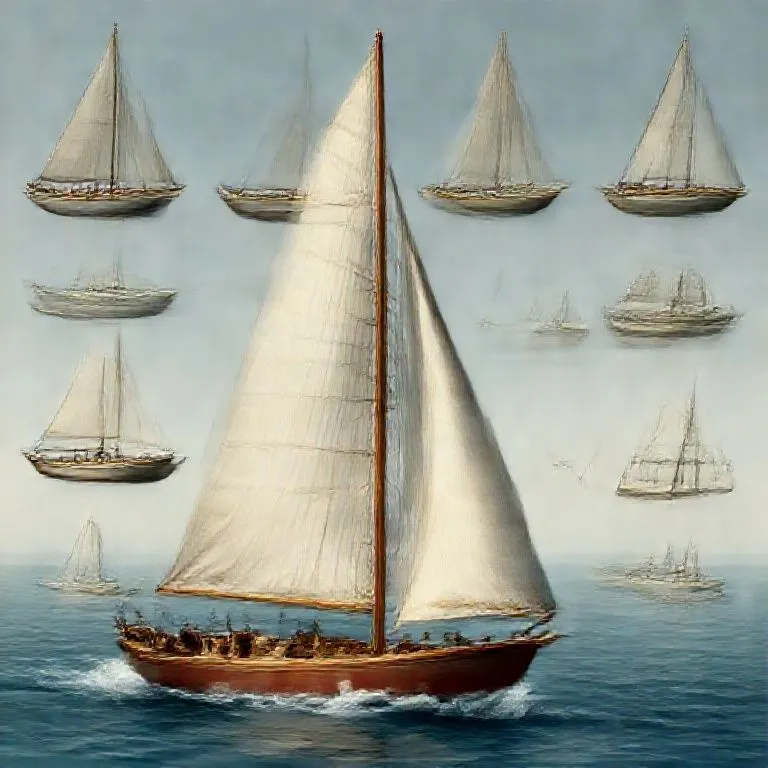
A sail is a tensile structure—typically made of fabric or other membrane materials—that uses wind power to propel sailing craft, including sailing ships, sailboats, windsurfers, ice boats, and even land yachts.
Use / Function
- Propulsion: Converts wind energy into motion to move a vessel.
- Maneuverability: Allows the vessel to travel in various directions relative to the wind (though not directly against it).
Operating principle
Aerodynamics: Sails work by trapping the wind (drag) or by creating a pressure difference (lift).
- Downwind: The sail acts as a parachute, catching the wind and being pushed by it (drag).
- Upwind/Crosswind: The sail acts like an airfoil (airplane wing). The air flows faster over the curved outer surface (lee side) than the inner surface (windward side), creating lower pressure on the lee side and generating lift that pulls the boat forward.
How to create it
- Material Prep: Cut panels of fabric (canvas, linen, or woven mats).
- Sewing: Stitch the panels together to form the desired shape (square, triangular, etc.).
- Reinforcement: Reinforce the edges (boltropes) and corners (cringles) with strong rope to withstand tension.
- Rigging: Attach the sail to a mast and boom using ropes (halyards and sheets).
Materials needed
- Fabric: Canvas (cotton/hemp), linen, or woven reed mats (ancient).
- Rope: For reinforcement and rigging (plant fibers).
- Needle and Thread: For assembly.
Variants and improvements
- Square Sail: Simple, effective downwind, but poor upwind performance. Ancient standard.
- Lateen/Triangular Sail: Allows sailing closer to the wind (tacking).
- Modern Sails: Made of synthetic fibers (dacron, kevlar) for shape retention and durability.
Limits and risks
- Wind Dependence: Useless without wind.
- Storms: High winds can tear sails or capsize the boat; sails must be reefed (reduced) or furled.
- Wear: UV light and salt spray degrade natural fabrics over time.