Generated with AI3 min read
Multitool
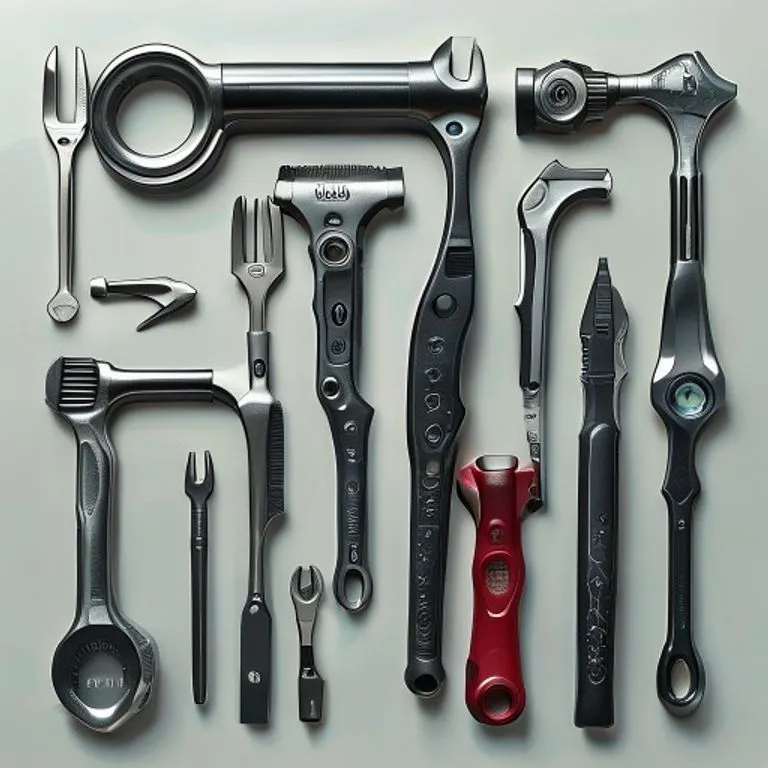
Brief description
A portable, versatile device that combines several individual tools into a single compact unit. It is designed to provide a wide range of functionalities for repair, construction, and survival tasks without the need to carry a heavy toolbox.
Use / Function
- Primary use: General-purpose maintenance, field repairs, and survival situations.
- Secondary uses: Crafting, first aid (removing splinters, cutting bandages), and food preparation.
- Scale: Personal, survival.
Operating principle
The multitool typically operates on a folding mechanism where various tools (blades, drivers, pliers) pivot around a central axle or are stored within handles. When needed, a specific tool is deployed and locked into place for use.
- Leverage: Pliers and cutting tools utilize leverage to amplify force.
- Torque: Screwdrivers transfer rotational force.
How to create it
Minimum functional version
- Selection: Choose the essential tool heads needed (e.g., a blade and a screwdriver).
- Fabrication: Forge or grind these tools from steel.
- Assembly: Create a handle (wood or metal) with a pivot point (bolt or rivet) that allows the tools to rotate in and out.
- Locking: Implement a simple friction or spring mechanism to keep the tool open during use.
Technical level
- Intermediate to Advanced: Requires precise metalworking, tempering, and assembly skills to ensure the tools are durable and fit together correctly.
Materials needed
- Essential materials:
- Steel: High-carbon steel for blades (hardness) and tougher steel for pliers/handles (durability).
- Rivets/Pins: For the pivot points.
- Tools:
- Forge/Anvil: For shaping metal.
- Files/Grinder: For sharpening and refining shapes.
- Drill: For making pivot holes.
- Possible substitutes:
- Iron: Can be used but will deform easier and hold an edge poorly.
- Bronze: Suitable for non-critical parts or decoration, but poor for blades/tools.
Variants and improvements
- Pocket Knife Style: Focuses on blades, can openers, and corkscrews (e.g., Swiss Army Knife).
- Plier-based: Built around a central pair of pliers with other tools in the handles.
- Card/Wallet Tools: Flat, single-piece metal with cutouts for wrenches and edges.
- Improvements: Locking mechanisms for safety, replaceable wire cutters, ergonomic grips.
Limits and risks
- Durability: Generally less robust than dedicated, full-sized tools. Heavy torque can break the pivot or the tool itself.
- Ergonomics: Handles are often blocky or uncomfortable during prolonged use.
- Safety: Non-locking blades can fold back on the user’s fingers.