Generated with AI3 min read
Ice House
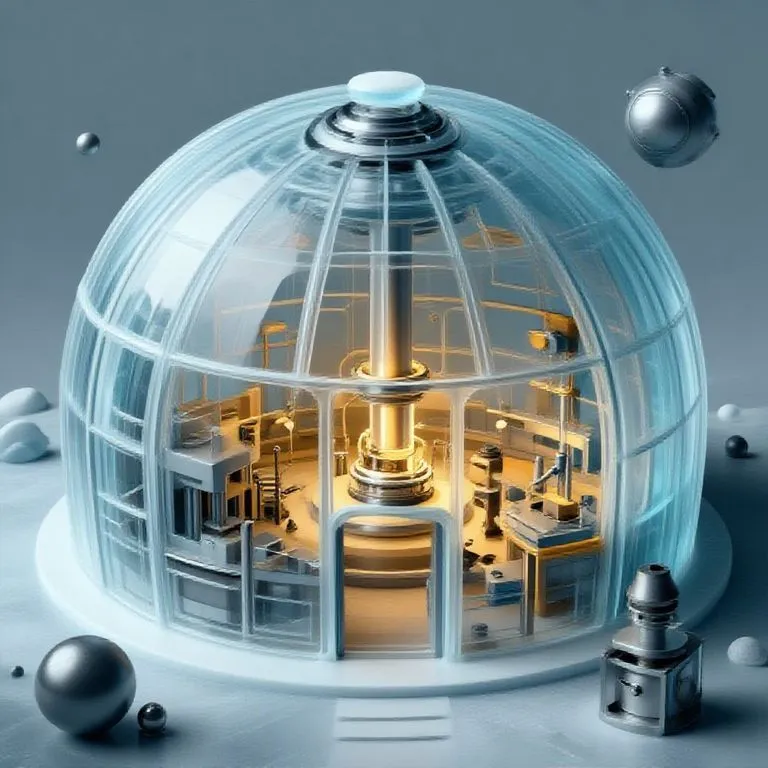
Brief Description
An ice house, or ice pit, is a structure designed to store ice and snow harvested during winter, preserving them through thermal insulation for use during warmer months. Before mechanical refrigeration, this was the only way to have ice in summer.
Use / Function
Its exclusive function is long-term ice storage.
- Primary Use: Preservation of ice for cooling food, drinks, and preparing sorbets or medicines.
- Scale: Community or manorial (due to the large size required to be efficient).
Operating Principle
It relies on thermal mass and extreme insulation:
- Thermal Mass: Ice is stored in a large compact block. The larger the volume relative to the surface area, the slower the melting (square-cube law).
- Insulation: Thick walls of stone or brick, often buried wholly or partially (taking advantage of the cool underground temperature), and layers of insulating materials like straw or sawdust separating the ice from the walls and air.
- Drainage: It is crucial to drain the water from melting ice, as liquid water conducts heat better than air and would accelerate the melting of the remaining ice.
How to Create It
Typical Structure
- Excavation: Dig a deep pit, cylindrical or conical, on a north-facing slope (northern hemisphere) or in a shaded spot.
- Lining: Line the walls with stone or brick.
- Drainage: Build a drainage channel at the bottom for meltwater.
- Roofing: Construct a very thick, insulated dome or roof over the pit.
- Filling:
- Introduce snow or ice, compacting it tightly to remove air pockets.
- Interleave layers of straw or ferns between the ice and the walls.
- Cover the top with a thick layer of insulating material.
Technical Level Required
- Intermediate: Requires excavation and structural masonry work, as well as knowledge of drainage.
Materials Needed
- Stone/Brick: For structure and cold retention.
- Straw/Sawdust/Dry Leaves: As fundamental thermal insulation.
- Wood: For the roof and access doors.
- Ice/Snow: The raw material.
Variants and Improvements
- Yakhchal (Persia): Conical adobe structures with very thick walls and water catchment systems that freeze outside during winter nights.
- Urban Ice Houses: Insulated basements in city buildings for commercial distribution.
Limits and Risks
- Winter Dependence: Requires freezing temperatures in winter to harvest the ice.
- Inevitable Melting: There are always losses; the goal is to slow them down, not stop them.
- Suffocation Hazard: CO2 can accumulate in deep, poorly ventilated pits; caution when entering.