Generated with AI2 min read
Fireworks
Brief description
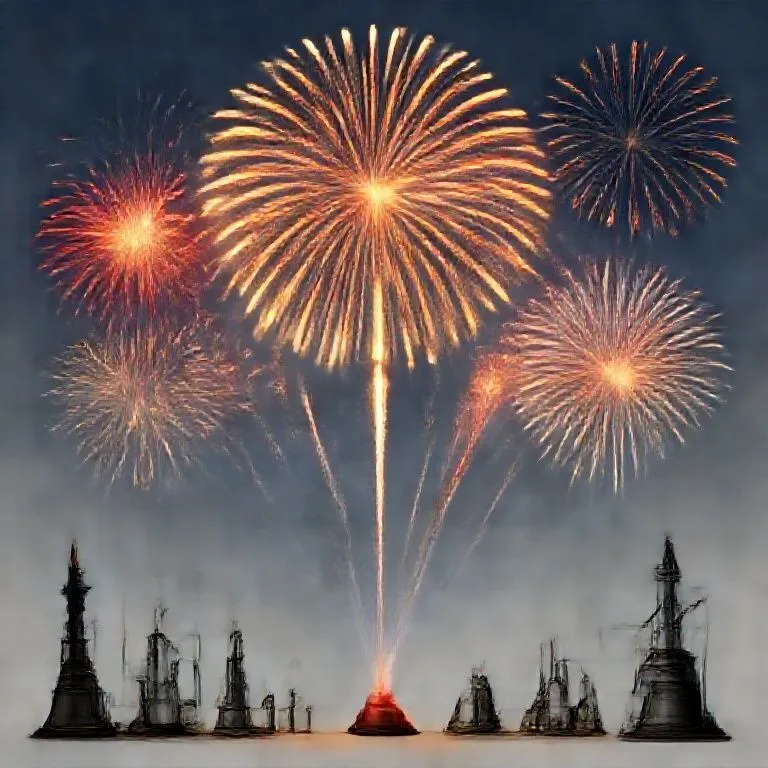
Fireworks are pyrotechnic devices that create light, color, and sound through controlled combustion. They are used for celebration, signaling, and display.
Use / Function
- Celebration and ceremony: Visual and auditory displays for festivals and holidays.
- Signaling: Historical use for military and maritime signals.
- Public events: Coordinated shows for large gatherings.
- Scale: Community to mass events.
Operating principle
Fireworks rely on rapid combustion of a fuel and oxidizer. A lift charge propels the shell upward, a time fuse delays ignition, and a burst charge ignites stars. The stars contain metal salts that emit color when burning, while binders and charcoal influence burn rate and sparkle.
How to create it
- Design: Choose a casing, fuse timing, and the desired effect (burst, fountain, crackle).
- Composition: Prepare a stable fuel-oxidizer mix and stars that burn with specific colors.
- Assembly: Pack the lift charge, shell, and stars so the fuse triggers the burst at altitude.
- Technical level: Advanced. Requires precise control of materials and strict safety standards.
Materials needed
- Essential: Paper casing, gunpowder, timed fuse, and star compositions (fuel, oxidizer, metal salts).
- Tools: Molds, rammers, drying space, and protective equipment.
- Possible substitutes: For low-intensity signals, use simpler flares with fewer color additives.
Variants and improvements
- Firecrackers: Loud report with minimal light.
- Aerial shells: High-altitude bursts with multi-break patterns.
- Fountains: Ground-based sprays of sparks.
- Rockets: Self-propelled ascent with a burst at peak.
- Computer-synced shows: Precise timing with digital ignition.
Limits and risks
- Fire hazard: Hot embers and falling debris can ignite structures or vegetation.
- Injury risk: Misfires and early bursts can cause severe burns or trauma.
- Noise impact: Loud reports can harm hearing or disturb wildlife.
- Regulation: Often restricted by local laws and safety codes.