Generated with AI2 min read
Crosswalk
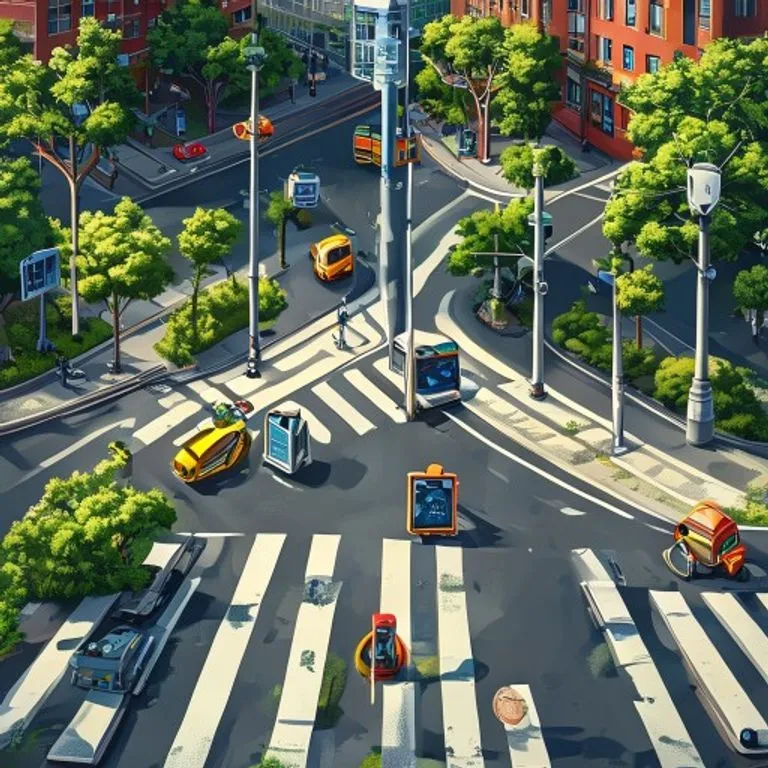
Brief description
A designated area on a road for pedestrians to cross safely, often marked with distinct patterns or raised surfaces to alert drivers.
Use / Function
- Primary use: Provide a safe crossing point for pedestrians across roads with vehicle traffic.
- Secondary uses: Traffic calming (when raised), organizing urban flow.
- Scale: Local, urban streets, intersections.
Operating principle
- Visual Contrast: High-contrast markings (usually white stripes on dark asphalt) make the crossing visible to drivers from a distance.
- Tactile Feedback: Raised surfaces or different textures (like cobblestones) alert drivers through vibration and pedestrians through feel.
- Right of Way: Establishes a legal or social convention where vehicles must yield to pedestrians.
How to create it
Basic Painted Crosswalk (Zebra)
- Selection: Choose a location with good visibility for both pedestrians and drivers.
- Cleaning: Clean the road surface to ensure paint adhesion.
- Marking: Paint parallel white stripes (about 40-60 cm wide) across the road width.
- Signage: Add vertical signs to warn approaching drivers.
Raised Crosswalk (Speed Table)
- Forming: Build a flat-topped hump across the road using asphalt or concrete.
- Ramping: Create gentle ramps on both sides for vehicles to ascend and descend.
- Surfacing: Mark the top surface with paint or different colored stones.
Materials needed
- Essential: Paint (durable road marking paint), Stone (for cobblestone crossings).
- Construction: Asphalt or Concrete (for raised versions).
- Tools: Brushes, stencils, road rollers (for asphalt).
Variants and improvements
- Zebra Crossing: The classic black and white striped pattern.
- Pelican/Puffin Crossing: Incorporates traffic lights for controlled crossing (requires electricity).
- Raised Crosswalk: Acts as a speed bump to physically slow down traffic.
- Textured Crossing: Uses different materials like bricks or cobblestones for aesthetic and tactile distinction.
Limits and risks
- Visibility: Markings can fade or become obscured by snow/dirt.
- Driver Compliance: Relies on drivers obeying the rules; does not physically stop a car (unless combined with barriers/lights).
- False Security: Pedestrians may assume safety without checking for oncoming traffic.