NaturalGenerated with AI2 min read
Cinnabar
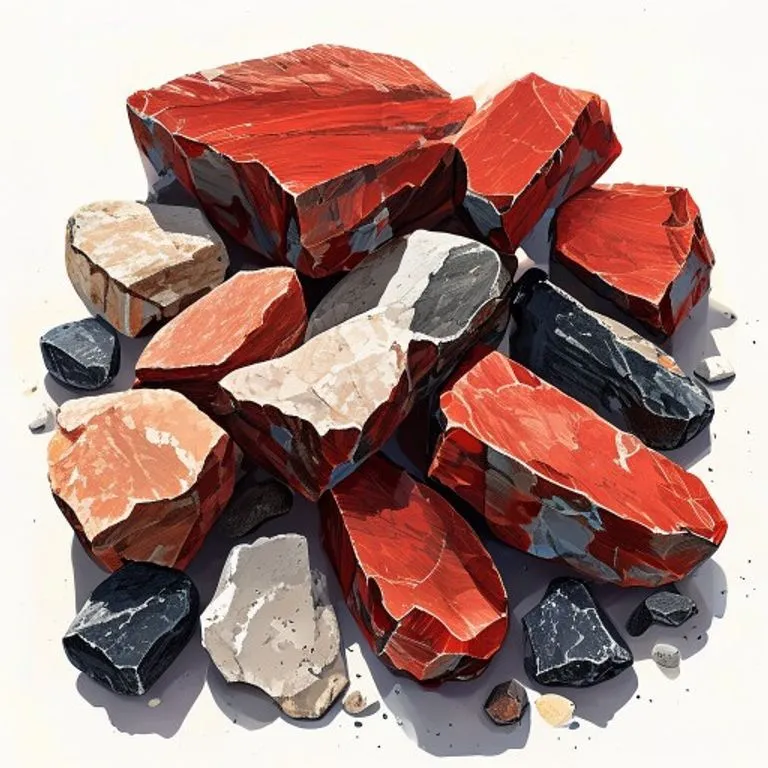
Cinnabar (mercury sulfide, HgS) is the bright scarlet to brick-red ore of mercury. It is the most common source of mercury in nature.
Description of what it is like
- Appearance: Bright red to brownish-red crystals or massive granular aggregates.
- Streak: Scarlet.
- Luster: Adamantine (diamond-like) to dull.
- Toxicity: Contains mercury; handling it is relatively safe if not ingested or heated, but dust is dangerous.
Origin and where to find it
- Environments: Veins in volcanic regions and hot springs.
- Signs: The bright red color is very distinctive.
- Processing: Roasting releases mercury.
Minimum processing required
- Grinding: To use as pigment (vermilion).
- Roasting: To extract mercury.
Tools needed to work on it
- Hammer/Pick: For mining.
- Grinder: For pigment.
- Furnace: For mercury extraction.
Common forms of use
- Pigment: Vermilion (historical, now replaced by cadmium or synthetic reds).
- Ore: For mercury extraction.
Possible substitutes
- Cadmium Red: Non-mercury pigment substitute (also toxic).
- Iron Oxide: Non-toxic red pigment.
Limitations and common failures
- Darkening: Turns black upon exposure to light over time (metacinnabar).
Risks and safety
- Mercury Poisoning: Releasing vapors when heated.
- Dust: Inhalation is dangerous.
Related materials
Properties
- Bright red color
- Heavy
- Soft
- Toxic
Used for
- Mercury ore
- Pigment (Vermilion)
- Jewelry (rarely, toxic)
Manufacturing / Process
Natural mineral.