SyntheticGenerated with AI3 min read
Chloroform (Trichloromethane)
CHCl3
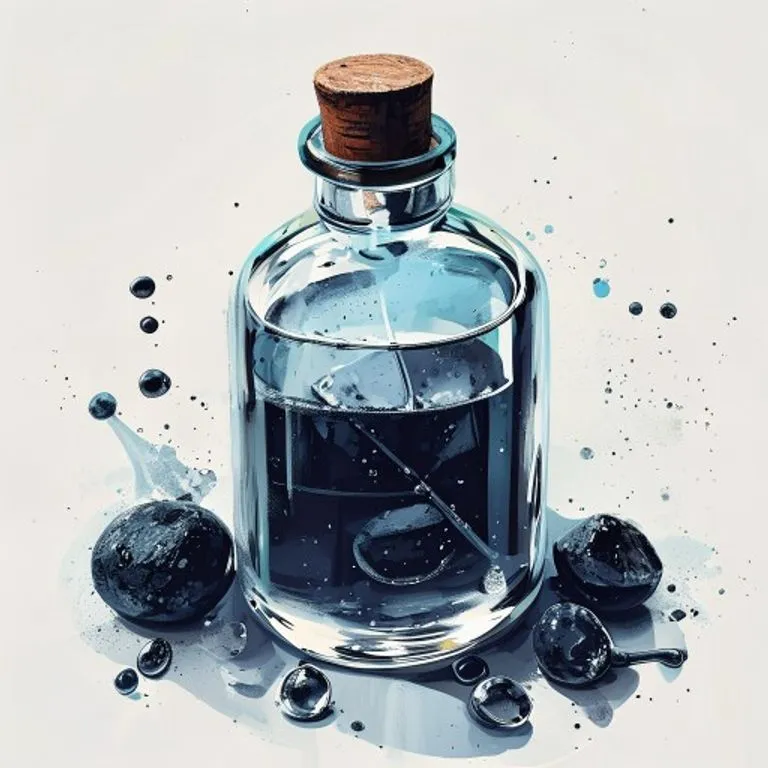
Chloroform is a colorless, sweet-smelling, dense liquid that is a powerful anesthetic and an effective solvent for fats, oils, and resins. While its use in medicine has been largely replaced by safer alternatives, it remains a vital industrial chemical.
Description of what it is like
A heavy, clear liquid that evaporates easily. It has a pleasant, sugary odor but is toxic if inhaled in high concentrations. It does not mix well with water but is miscible with most organic solvents.
Origin and where to find it
- Synthetic: Chloroform does not occur naturally in significant quantities. It must be synthesized in a laboratory or industrial setting.
Minimum processing required
Haloform Reaction:
- Preparation: Combine Acetone (or ethyl alcohol) with a strong solution of Bleach (sodium hypochlorite).
- Reaction: The chemicals react to form chloroform and sodium acetate.
- Separation: Chloroform is denser than water and will settle at the bottom of the container as a clear, oily layer.
- Purification: The bottom layer is collected and distilled to remove impurities and residual water.
Tools needed to work on it
- Glassware: Borosilicate glass flasks and condensers are necessary for distillation.
- Separatory Funnel: To separate the heavy chloroform layer from the aqueous reaction mixture.
- Thermometer: To monitor boiling points during distillation (Chloroform boils at 61.2°C).
- Ventilation: A fume hood or well-ventilated outdoor area is mandatory.
Common forms of use
- Liquid Solvent: Used in labs to dissolve organic compounds.
- Anesthetic Vapor: Historically inhaled from a soaked cloth or through a mask.
- Refrigerant Precursor: Used in the production of Teflon and various refrigerants.
Possible substitutes
- Ether: Another early anesthetic, though highly flammable and prone to causing nausea.
- Alcohol: A much less effective and more dangerous sedative for surgery.
- Modern Anesthetics: Such as Sevoflurane or Isoflurane, which have fewer side effects.
Limitations and common failures
- Decomposition: Exposure to light and air can cause chloroform to decompose into phosgene, a highly toxic gas. It must be stored in dark glass bottles with minimal air space.
- Liver Toxicity: Prolonged exposure or high doses can cause severe liver and kidney damage.
Risks and safety
- Phosgene Formation: Always check for the smell of freshly cut hay (phosgene) before use.
- Respiratory Arrest: Overdosage as an anesthetic can easily stop a patient’s breathing.
- Skin Irritation: Can cause chemical burns if left in contact with the skin.
Related materials
Properties
- Volatile liquid
- Colorless
- Sweet-smelling
- Anesthetic
- Non-flammable
Used for
- Anesthesia (historic)
- Solvent
- Chemical precursor
- Extraction of alkaloids
Manufacturing / Process
Produced via the haloform reaction by reacting acetone (or ethanol) with bleach (sodium hypochlorite).