Generated with AI2 min read
Oar
Made of
Brief description
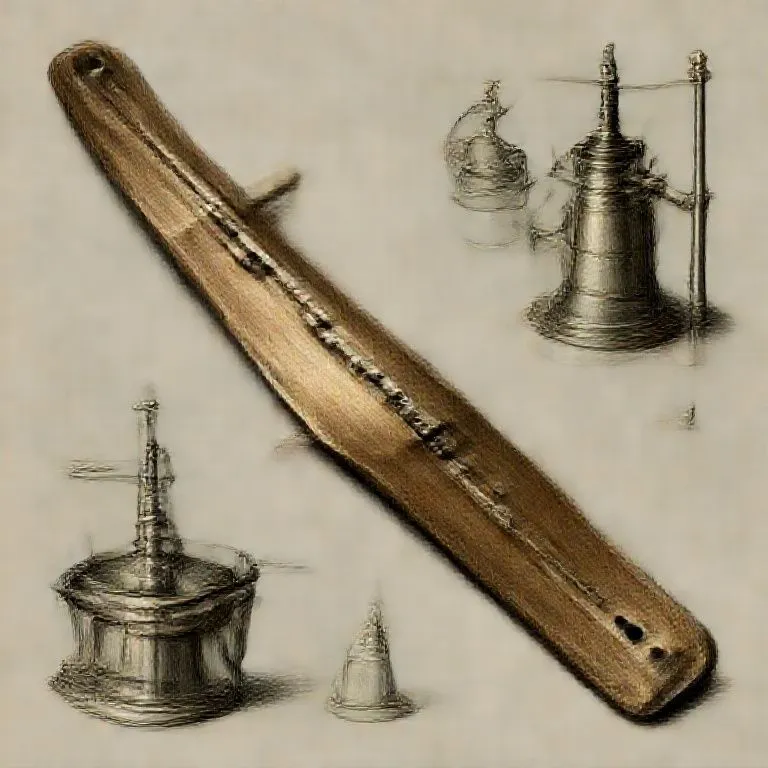
An oar is an implement used for waterborne propulsion. It consists of a long shaft with a flat blade at one end. Unlike a paddle, which is held by the user and not attached to the vessel, an oar is connected to the boat via a fulcrum (rowlock or oarlock).
Use / Function
- Propulsion: Driving a boat through water by pushing against the water with the blade.
- Steering: Used to direct the course of the boat.
- Stability: Can be used to balance the boat in rough water.
Operating principle
Leverage: The oar acts as a second-class lever (or first-class, depending on the reference frame). The water acts as the fulcrum for the blade, the oarlock acts as the load (moving the boat), and the rower provides the effort at the handle. Alternatively, the oarlock is the fulcrum, the water is the resistance, and the hand is the effort.
How to create it
- Selection: Select a straight, strong, and flexible piece of wood (like ash or spruce).
- Shaping: Carve the handle at one end and flatten the other end into a blade.
- Balancing: Ensure the oar is balanced so that the blade doesn’t feel too heavy when pivoted at the oarlock.
- Smoothing: Sand the handle to prevent blisters and the shaft to reduce friction.
Materials needed
- Wood: Ash, spruce, or pine are common choices for their strength-to-weight ratio.
- Tools: [[hand-axe|Axe]], [[scraper|Scraper]], [[chisel|Chisel]] (or plane), [[sandpaper|Sandpaper]].
Variants and improvements
- Sweep Oar: A long oar used by one person.
- Sculling Oar: Used over the stern to propel the boat with a side-to-side motion.
- Spoon Blade: Curved blade for better grip on the water (modern).
Limits and risks
- Breakage: Can snap under heavy load or if caught in an obstacle.
- Fatigue: Rowing requires significant physical exertion.
- Loss: Can be dropped overboard if not secured.