Generated with AI2 min read
Micrometer
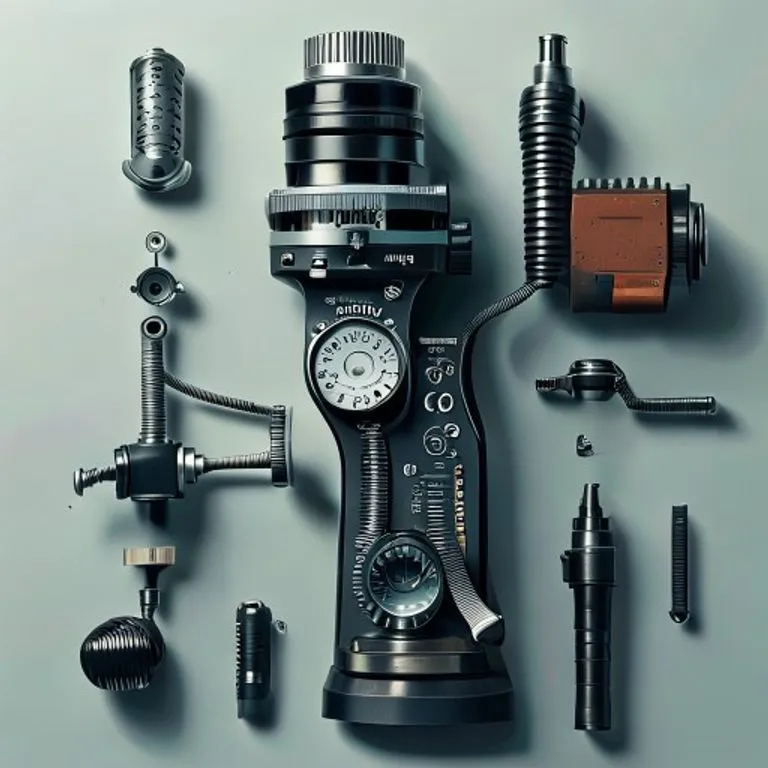
Brief description
High-precision measuring instrument used to measure very small dimensions with accuracies of hundredths or thousandths of a millimeter.
Use / Function
- Precision Mechanics: Measuring shafts, sheet thicknesses, wires, and machined parts.
- Engineering: Quality control in manufacturing.
Operating principle
Based on the micrometer screw: a screw with a very fine and precise thread. Turning the screw advances it a very small, known distance (pitch). Rotation is amplified on a circular scale, allowing fractions of a turn to be read.
How to create it
- C-Frame: A rigid frame that does not deform.
- Anvil and Spindle: Flat, parallel contact surfaces.
- Screw: A fine-pitch screw (e.g., 0.5 mm per turn).
- Thimble: Graduated cylinder attached to the screw.
Materials needed
- Essential: Hardened steel (to avoid wear on tips and thread), Cast iron (for the frame).
- Tools: High-precision lathe, grinding tools.
Variants and improvements
- Outside Micrometer: For measuring external thicknesses and diameters.
- Inside Micrometer: For measuring hole diameters.
- Depth Micrometer: For measuring groove depth.
Limits and risks
- Clamping Force: Overtightening can deform the part or instrument (a ratchet is used to limit force).
- Temperature: Hand heat can expand the frame; should be held by thermal insulation.
- Cleanliness: Dust on the screw or faces ruins measurement.