Crucible
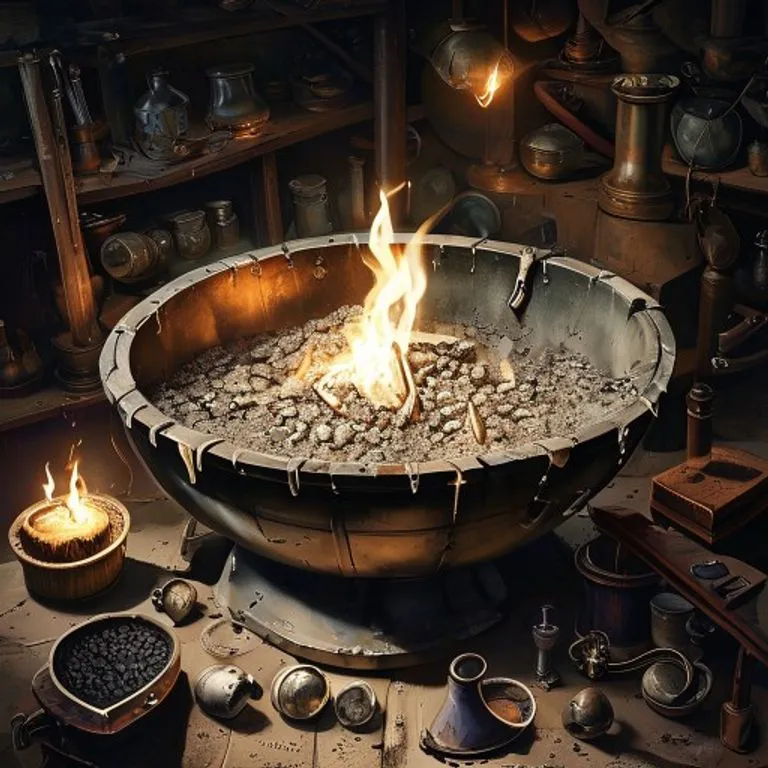
Brief description
A container that can withstand very high temperatures, used for metal, glass, and pigment production. It allows for the melting and refining of materials that require intense heat without contaminating the melt.
Use / Function
Crucibles are used for melting metals (like gold, silver, copper, and iron), creating alloys (like steel or bronze), and glassmaking. They are essential for any high-temperature metallurgical process where the liquid material needs to be contained safely and kept pure.
Operating principle
The crucible is made from refractory materials—substances that maintain their strength and do not melt at extremely high temperatures. The heat is applied to the exterior of the crucible, which then transfers the thermal energy to its contents while resisting thermal shock (cracking from rapid temperature changes).
How to create it
- Select Refractory Material: Mix high-alumina clay with “temper” (like crushed old crucibles, sand, or graphite) to improve thermal shock resistance and reduce shrinkage.
- Forming: Shape the mixture into a cup-like or conical vessel with thick walls. A spout can be added for pouring.
- Drying: Allow the crucible to air-dry slowly and completely to prevent cracking during firing.
- Firing: Bake the crucible in a kiln at a high temperature to vitrify the clay and achieve its final refractory properties.
Materials
- Refractory Clay: Base material.
- Graphite or Sand: Added to improve heat conductivity and durability.
- Water: For mixing.
Variants
- Hessian Crucibles: Historically famous clay crucibles from Germany.
- Graphite Crucibles: Use a high percentage of carbon for better conductivity.
- Ceramic-Bonded Crucibles: For specialized industrial uses.
Limits / Risks
- Thermal Shock: Rapid heating or cooling can cause the crucible to shatter, spilling molten metal.
- Chemical Erosion: Molten fluxes or certain metals can eat away at the crucible walls over time.
- Failure: A crucible “leaking” or breaking inside a furnace is extremely dangerous.