Generated with AI2 min read
Corkscrew
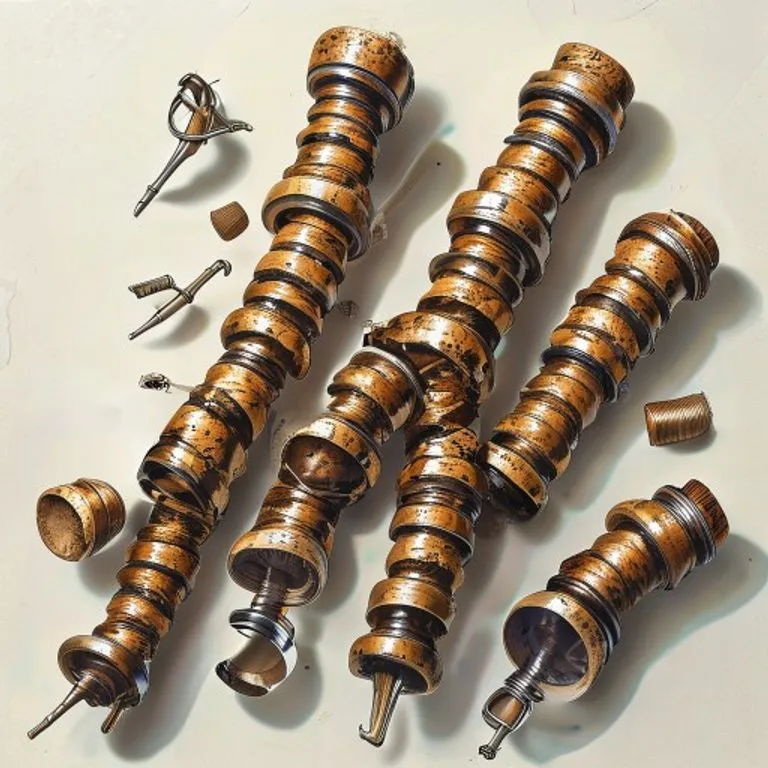
Made of
Brief description
A tool for drawing corks from bottles. It consists of a pointed metallic helix (a screw) attached to a handle.
Use / Function
- Primary use: Removing cork stoppers from wine or oil bottles without damaging the container.
- Scale: Domestic.
Operating principle
The corkscrew works by screwing the helical worm into the cork, gripping it from the inside. Then, pulling force (direct or leveraged) extracts the cork against friction.
- Helix (Screw): Acts as an inclined plane wrapped around a cylinder, allowing it to penetrate the cork with rotation.
- Grip: The threads hold the cork material firmly.
How to create it
Minimum functional version
- Worm: Twist a steel wire into a helix shape, ensuring the tip is sharp and centered.
- Handle: Attach a perpendicular handle (wood or metal) to the top of the wire.
- Hardening: The wire must be stiff enough not to straighten out when pulling.
Technical level
- Intermediate: Creating a consistent helix that doesn’t crumble the cork requires skill in wire bending and tempering.
Materials needed
- Essential materials:
- Steel Wire: Strong, springy steel that holds its shape.
- Handle: Wood or metal.
- Tools:
- Pliers/Mandrel: To wind the wire into a consistent spiral.
- Heat Source: To temper the steel.
Variants and improvements
- T-Handle: Simple pull.
- Waiter’s Friend (Sommelier Knife): Includes a lever arm that rests on the bottle lip to pry the cork out easily.
- Winged Corkscrew: Uses two levers (wings) and a rack-and-pinion gear to lift the cork as the wings are pushed down.
- Ah-So (Prong Puller): Two prongs slide down the sides of the cork to grip it without piercing.
Limits and risks
- Cork Breakage: If the worm is too thick or the cork is dry, it may crumble or break in half.
- Bottle Breakage: Applying too much side pressure or leverage on the glass rim can chip or shatter the bottle.